Meet The Author

Main Uddin is one of the pioneer blogger cum e-marketer from North East India(Assam).He is also a Skilled web Developer and regular columnist for various news portals around the globe.Read More

author

Hidden secrets reveals: Millions of Website Traffic Saga 2019

Leave a Comment
Every once in a while you run an SEO campaign that changes the way you do everything.

The lessons you learn, the challenges you face, and the results you achieve inspire you to rewrite your whole SEO gameplan.
This is the story of one of those SEO campaigns.
As you might already know, I’ve been working closely as a director of a very talented agency called The Search Initiative (TSI).  Since coming on, we’ve encountered many wins and this case study is one of them.
In a few months, we lifted their algorithmic penalty and increased traffic by 9,109%.  You’re about to learn the exact steps we took to achieve this.
You’ll learn:
  • A detailed onsite, offsite, and technical SEO audit process
  • How to repair algorithmic penalty problems
  • A safe link building strategy for 2019
  • Conversion rate optimization strategies for fast growth

Case Study: From 1,036 to 95,411 Organic Visitors Per Month

Contents
  • 1 Case Study: From 1,036 to 95,411 Organic Visitors Per Month
    • 1.1 The Challenge
    • 1.2 General Approach
  • 2 How We Did It
    • 2.1 The Dynamic Start: Backlink Review
    • 2.2 Crucial Stage 2: The Onsite Audit
      • 2.2.1 Technical SEO
        • 2.2.1.1 Website Penalties
        • 2.2.1.2 HTTP / HTTPS Conflicts
        • 2.2.1.3 Indexed Content
        • 2.2.1.4 Site Speed Optimization
        • 2.2.1.5 3XX Redirects
        • 2.2.1.6 4XX Errors
        • 2.2.1.7 Site Structure
        • 2.2.1.8 Robots.txt
        • 2.2.1.9 WHOIS
        • 2.2.1.10 Internal Linking
        • 2.2.1.11 Mobile Formatting
        • 2.2.1.12 Schema Markup
        • 2.2.1.13 Accelerated Mobile Pages
      • 2.2.2 Content SEO
        • 2.2.2.1 Thin Content
        • 2.2.2.2 Duplicate Content
        • 2.2.2.3 Page Title Optimization
        • 2.2.2.4 Heading Optimization
        • 2.2.2.5 Meta Description Optimization
        • 2.2.2.6 Image Optimization
    • 2.3 Another Discovery: Potential Cloudflare Issue
    • 2.4 Campaign Goals Breakdown
  • 3 Success: Algorithmic Penalty Lifted
    • 3.1 More Technical Discoveries
      • 3.1.1 Page Speed
      • 3.1.2 HTTPS Conflicts
      • 3.1.3 Site structure and Internal Linking
      • 3.1.4 LSI Keyword Research
    • 3.2 Ongoing Work: Link Building
    • 3.3 More Adjustments: Keyword Relevance and Cannibalization
    • 3.4 Content Improvements
    • 3.5 Conversion Rate Optimization: Increased Leads by 7.5x
  • 4 The Results (AKA Traffic Boner)
    • 4.1 Organic Traffic Improvements
  • 5 Conclusion
  • 6 And one more thing…
This is the story of a campaign for a social media marketing website.
Our client monetizes their website by selling monthly subscriptions to achieve better social proof on Facebook, Instagram, and other social networks.
If you’ve ever been in this niche before, you’d know it’s not an easy one.

The Challenge

The client joined The Search Initiative with a heavy algorithmic penalty. Traffic at the time had decreased significantly to almost 1/10th of the previous volume.
If you’ve ever had an algorithmic penalty before, you can directly connect with the frustration and annoyance of such a disaster.
The main challenge was to determine what type of a penalty hit the site and to take action on getting it lifted.
algorithmic penalty for social media case study

General Approach

We started by thoroughly analyzing the data based on the tools available to us and the details provided by the client. The initial analysis included looking into:
  • Google Analytics
  • Google Search Console
  • Keyword tracker (Agency Analytics)
  • SEMrush
  • Ahrefs
  • Cloudflare
  • Server settings
  • Previous link building reports and audits
Once we determined the most probable cause of the penalty, we put together a plan of action.
setup a call
We created a comprehensive onsite, offsite and technical audit before building the overall domain authority through our own link building strategies and traditional outreach to relevant blogs and sites.

How We Did It

The Dynamic Start: Backlink Review

The link profile of the domain included a lot of spammy, low-value domains.
Since a previous automated backlink audit (most probably done using Link Research Tools) had been performed before the client joined our agency, we started by reviewing its results.
We decided that we could perform a much more careful, deep assessment; therefore our own link audit was completed – this time manually.
At TSI we know that if it comes to potential link penalties, especially the algorithmic ones, we have to be very thorough with the link reviews. To start the analysis, we downloaded all the link data from the following sources:
  • Google Search Console – it’s a real no-brainer to include all the links that Google definitely has in their database. However, according to this Google Webmaster Help page, you have to remember that GSC presents only a sample of links, not all of them.
Links To Your Site - GSC
  • Ahrefs – it is our go-to and best 3rd party tool when it comes to links. Their database is an absolute beast and the freshness of the data is also outstanding. To gather all link data, go to Ahrefs, type in your domain and select Backlinks. Now you’re good to Export it to an Excel file:
Ahrefs Backlinks
By the way, make sure you select the Full Export option, otherwise, you’ll be exporting only the first 1000 rows with the Quick Export:
Ahrefs - Full Export
  • Majestic – even though their crawler might not be as complete as Ahrefs, you still want to have as many link sources as possible for your audit. With Majestic, you’ll have to type in your domain → Select “Root Domain”→ Export Data.
Majestic Link Export
Now, because of the link memory (AKA ghost links – links that are deleted, but Google still “remembers”), we export the data from both, Fresh and Historic indexes. Also, ensure to set the tool to “Show deleted backlinks”.
  • Moz and SEMrush – Similarly to Majestic, with these two we just want to have as many links as possible and complement the database, in case Ahrefs missed some.
How to get links data in Moz Open Site Explorer: Your site → Inbound Links → Link State: All links → Export CSV
Moz Inbound Links
How to get links data in SEMrush: Your Site → Backlink Analytics → Backlinks → Export. Please make sure to select “All links” option.
SEM Rush Baclinks Analysis
We had all the data now, so it was time to clean it up a bit.
There’s no real secret in how to use Excel or Google Sheets, so I’ll just list what you’ll have to do with all the link data prior to analyzing it:
  1. Dump all Ahrefs data into a spreadsheet. If you’re wondering why we start with Ahrefs, it’s explained in step 4.
  2. Add unique links from GSC into the same spreadsheet.
  3. Add unique links from all other sources to the same spreadsheet.
  4. Get Ahrefs UR/DR and Traffic metrics for all the links (Ahrefs data will already have these metrics, so you’re saving time and Ahrefs’ credits).
  5. Spreadsheet ready!
With the spreadsheet, we started a very laborious process of reviewing all the links. We classify them into 3 categories:
  • Safe – these are good quality links.
  • Neutral – these are links that are somehow suspicious and Google might not like them that much – although they’re quite unlikely to be flagged as harmful. We always highlight these in case we were to re-run the link audit operation (for example if the penalty did not get lifted).
  • Toxic – all the spammy and harmful stuff you’d rather stay away from.
Some of the main criteria we’re always checking:
  • Does it look spammy/dodgy AF?
  • Does it link out to many sites?
  • Does the content make sense?
  • What is the link type (e.g. comment spam or some sitewide sidebar links would be marked as toxic)?
  • Is the link relevant to your site?
  • Is the link visible?
  • Does it have any traffic/ranks for any keywords? Ahrefs’ data helps here.
  • Is the page/site authoritative? Ahrefs’ DR helps here.
  • What’s the anchor text? If you have an unnatural ratio, then it might be required to disavow some links with targeted anchor texts.
  • Is the link follow/nofollow? No point disavowing nofollow links, right?
  • Is it a legit link or one of these scraping/statistical tools?
  • Is it a link from a porn site? These are only desirable in specific cases, for example, you’re a porn site.  Otherwise, its disavow time.
If it is likely that the whole domain is spammy, we’d disavow the entire domain using “domain:” directive, instead of just a single URL.
I’m personally not a great fan of disavowing, but in the case of penalties, they are usually inevitable to help a quick recovery.
Here’s a sneak peek of how the audit document looked like once we finished reviewing all the links:
Backlink Audit Final
Then, we compared the results of our audit and current disavow file and uploaded a shiny new one to Google Search Console.
We disavowed 123 domains and 69 URLs.
Disavowed Domains
Additionally, we also used our in-house, proprietary tool to speed up the indexing of all the disavowed links. Something quite similar to Link Detox Boost, but done through our own tool.
Here’s a little screenshot from our tool:
TSI Proprietary Indexer

Crucial Stage 2: The Onsite Audit

The next step taken was a full, comprehensive onsite audit.
We reviewed the site and created an in-depth 30-page document addressing many onsite issues. Below is a list of elements covered in the audit:

Technical SEO

Website Penalties
First, we confirmed what the client has told us and established what kind of penalty we’re dealing with. It has to be emphasized that there were no manual actions reported in GSC, so we were dealing with a potential algorithmic penalty.
We searched Google for the brand name and did a “site:” operator search.
If you were able to find your brand name ranking number 1 in Google (or at least among your other profiles, e.g. social media accounts, on the first page) and it’s no longer there, you know you’re in trouble. Basically, if Google devaluates or de-ranks you for your own brand, this is a very strong indicator that you’ve been hit with a penalty.
search result
With the site: operator search it’s a bit more tricky. However, as a rule of thumb, you could expect to have your homepage show as a first result returned for a simple query: “site:domain.com” in Google.
Site search Diggity Marketing
Another way of confirming the content devaluation is to copy and search for a fragment of the text on your core pages. In the example below I do a Google search of 2 sentences from my July Roundup article (right-click to bring up a search of the text you highlight):
Content search in Google
As you can see below, Google finds it on my page and shows as a first result:
Content search - Google results
If it was not the case and Google did not show me first or at all, then it would be a very strong indication that the article page or site is under a heavy devaluation or even a penalty.
HTTP / HTTPS Conflicts
At this point, it is also a good idea to make sure Google has only indexed the preferred protocol for your site. To do that, run another simple site search:
site without ssl
You don’t want any http results to come up if you’re using https or vice versa. If it happens, you most probably do not have correct redirects in place.
To ensure a 301 redirect from http to https on WordPress, you can try using a combo of these 2 plugins:
  • https://wordpress.org/plugins/http-https-remover/ – ensures your internal resources are referenced with protocol independent links – start with //: instead of https:// or http://
  • https://wordpress.org/plugins/really-simple-ssl/ – does a good job and handles the redirects for you. From our experience, it works seamlessly in 9 out of 10 cases.
We describe https conflicts in more detail further down this case study.
Indexed Content
In this section, we focused on everything that was indexed but shouldn’t be.
As Rowan from TSI already discussed in his article The 4 Pillars of Mastering Google Website Crawl, you don’t want Google to crawl stuff that does not represent any value for the search engine. Here are some examples of such pages:
  • Cart & Checkout (example – it is actually indexed)
  • Your internal search results (example – noindexed)
  • WordPress image pages (it can actually really affect your rankings!)
  • Product review forms (example)
  • Product comparison pages
  • Session IDs (plenty of examples)
  • Empty categories – best not to have them
  • Login and Registration (examples)
You can find them by running “site:” operator searches, usually combined with the “inurl:” operator. Make sure to explore the supplemental search results, too, as Google will try to hide stuff from you:
Supplemental Index
You may be surprised how much of an issue it can really be. In the above case, only 3 URLs were revealed in the normal search, but 145 are really sitting in the supplemental index:
Supplemental index revealed
Site Speed Optimization
Site speed is a fundamental part of modern SEO, and a fast loading time has an immediate and significant effect on rankings, with Google actively suppressing the rankings of sites with a slow loading time.
Anything under 2 seconds is considered an acceptable load speed, but we recommend reducing speed as far as possible.
I go through it in more detail below.
3XX Redirects
If there are any internal pages that are using a 301 redirect from one URL to another, they should be linked directly with a status code 200 to prevent unnecessary load time or loss of authority.
Screaming Frog 301 internal crawl
4XX Errors
Very similar to 3XX Errors. You should avoid having any internal 4XX Errors.
Make sure to not only rely on Screaming Frog (or other crawlers) but, first of all, check your Google Search Console.
GSC Crawl Errors
Site Structure
The site structure plays an important part in helping Google determine the authority of each page and is broken into levels (or distance) from the homepage.
As a general rule, the homepage is most likely to rank for large broader terms, with deeper pages naturally gravitating towards fewer keywords that are more specific.
Level 0 – Homepage
Level 1 – Pages linked directly from homepage
Level 2 – Pages linked directly from Level 1
:
setup a call
I go through how we improved the Site Structure in more details below.
Robots.txt
This section of the audit covered a review of robots.txt and its improvements.
Unwanted sections of the site discovered during “indexed content analysis” (in this case it was the Cart and Author pages), which Google was not supposed to even attempt to visit, were excluded in robots.txt.
Additionally, we made sure that XML sitemap was being referenced in robots.txt file.
Make sure to always use an absolute path to reference your sitemap XML in robots.txt file!
Here’s an example robots.txt file similar to the one we suggested:
User-agent: *
Disallow: /cart/
Disallow: /author/

Sitemap: https://domain.com/sitemap.xml
WHOIS
Google is particularly interested in sites that do not drop and rarely swap ownership, this is because it’s a sign of trust that you are a legitimate site.
I recommend that you always consider renewing your domains for 2 – 3 years at a time since this is a good sign of trust and might be considered a very small ranking factor (note: I have not tested this).
Internal Linking
We evaluated the way the navigation was set up and advised the changes with the top menu to ensure better flow of link juice.
You should also look to change your internal anchor text so that links to the homepage have a more brand focus and internal pages are more targeted with Exact Match, Partial Match, and Topical anchor text. Read my article A Complete Guide to Anchor Text Optimization for more info on balancing these ratios.
Mobile Formatting
There were some formatting issues with the way the site was displaying on mobile devices. Although not so much of the ranking factors, cosmetic layout issues might be annoying and scare your potential users away. Who’d want to buy from a site that looks abandoned?
Schema Markup
We reviewed the markup errors Google Search Console has revealed:
GSC structured data issues
Structured Data is a great tool, however, it might be easily messed up by just a simple typo in the code. In this case, the issue came up for a number of author pages, which we wanted to remove anyway, so once we did so, all the issues were gone.
Accelerated Mobile Pages
Similarly to Schema Markup, we also reviewed AMP issues reported in Google Search Console:
AMP, exactly as Structured Data, is very sensitive. In this case, we had to fix an issue marked as “The attribute ‘type’ may not appear in tag ‘li’”.
Here’s exactly what was causing an issue:
HTML AMP Example
To fix it, we simply had to remove the “type” attribute.
More about fixing the most common AMP validation issues can be found here.

Content SEO

Thin Content
Thin content can quickly bring down the overall ranking of a site, as Google decides whether the site is able to deliver useful information to the Google users.
Once we crawled the site with Screaming Frog, we pulled all pages with less than a 1000 words and suggested to bulk it up:
Thin Content issues
What you should remember is that Screaming Frog provides a very naive word count. It includes all static on-page elements, such as: menu, footer, header, sidebar, etc. For this reason, 498 words reported in Screaming Frog might, in reality, be only 189 words of primary content.
Also, do not get caught up with this “I have to have 1000 words of content on every page”.
Google is after juicy content more than waffle, therefore if you can fully cover the subject and make it 100% on-topic within only 700 words, then I do not encourage you to be adding some random stuff only to hit the desired 1000 words.
Google won’t appreciate that. It’s better to leave it with 700 and see what happens.
Alternatively, research the subject more and add some relevant information there.
Recently we had an emergency plumbing site with city-specific pages talking about festivals in the area and showing some statistical data about the city.
You might have already guessed it – Google would not rank these pages for terms like “emergency plumber [city]”.
However, they ranked very well for keywords like “[city] population”, “festivals near [city]”, etc.
Why? Because the content was irrelevant to the promoted services and Google found absolutely different search intent for these pages.
Duplicate Content
Duplicate content can quickly bring down the overall ranking of a site, as Google decides whether the site is able to deliver useful information to the users.
We run a Siteliner crawl to see the “DC ratio” and where the most of the duplicated content was. Here’s how the tool looks like while scanning my site:
Siteliner scan
The recommended maximum amount of duplicated content is 10%. Some pages will be way over this mark, which might be quite normal. You should review each individually to ensure that the content there is, in fact, OK to be duplicated.
Siteliner Percentage Match
Some of the duplicated stuff in this case study came from the /author/ pages mentioned earlier and needed to be ROBOTS.TXT blocked.
By cleaning up the index, you are also able to get the duplicate content ratio down!
Page Title Optimization
Page titles (title tags) signal to users (and Google) a summary of your page and what they will find within.
When the page title includes a core keyword it is normally highlighted to users in the SERPs and can also compel users to click-through.
However, long page titles are often truncated and do not look professional, so it is wise to create tidy titles that will entice users to read more from your website and include your targeted keywords to feed the Google algorithm information that it needs to establish relevancy.
Once you crawl your site with Screaming Frog, make sure to review each element under the Page Titles section and act accordingly to the issue:
Page Titles in Screaming Frog
Also, make sure you read Ahrefs’ guide on How to Craft the Perfect SEO Title Tag to up your page titles game.
In this case, we also later used page titles to fight some keyword cannibalization issues, which I talk about a bit more below.
A very easy win for you could be just to extend the shortest page titles within your site by enriching them with some of your core keywords.
However, while building the page titles, be careful not to cause cannibalization issues or over-stuffing the title tags.
Heading Optimization
Headings are an important way to signal to Google more than just site structure, but also relevancy of content on a page.
We recommended that the client included a single H1 tag per page and used H2 tags for SEO relevant headings, and H3 tags for non-SEO-relevant headings.
This is a big relevancy signal to Google that could be well optimized on your site.
Similarly to Page Titles, Screaming Frog should help you while reviewing all your headings.
Having a combined list in front of you, you can notice some optimization issues (too long, too short or not unique headings) and rectify all them. Headings, especially H1 and H2 are often an overlooked optimisation element. Just by improving their readability, adding some keywords in or making them more relevant to the page content, you can get some very quick wins.
H1s in Screaming Frog
Meta Description Optimization
Meta descriptions don’t contribute to a site’s rankings, but relevant, compelling meta descriptions can encourage more people to click through from the SERPs.
Since meta descriptions are just a snippet of text, it’s important to include vital information about whether you are going to fulfil a person’s needs, giving them a good reason to click through.
I would recommend that you write a description that includes keywords you are targeting for each page and summarizes what your page is going to provide. When the meta description is too short or non-descriptive, Google uses random text from the page that doesn’t always encourage users to click through.
Meta Descriptions in Screaming Frog
This site had a lot of pages with missing or poorly auto-generated meta descriptions. Even though it’s not always efficient to manually do all your page descriptions, you should still do that for your core pages.
Image Optimization
Image alt attributes are used to make it easier for Google to understand what your images present. They also help you to show up in the Google Image Search.
Alt attributes also provide a place where you can include your core keywords, helping Google to get a better understanding of your page contextually, whilst also helping you to improve your keyword density.
Be careful not to over-optimize though.
Images in Screaming Frog
Proper image optimization, however, should also focus on decreasing the size of images. As you can see in the above screenshot, there were many images above 1 MB on our site. This meant that not only we looked at missing, over optimized or too long alt text, but also at all images above an average size of 100-150 KB.
In WordPress you can use many plugins that will automatically optimize your images:
  • TinyPNG
  • Kraken.io
  • ShortPixel
  • Smush WP

Another Discovery: Potential Cloudflare Issue

In the meantime, while creating the audit, the Campaign Manager spotted a serious Cloudflare configuration issue, which might have had been causing Googlebot crawlability issues. The setting was amended immediately and crawl speed in Google Search Console increased in order to force a re-crawl on the site as soon as possible.
If you use Cloudflare, it might be worth looking at the below option:
CloudFlare Google Fake Bot Settings
It’s located under “Firewall → Package: Cloudflare Rule Set → Advanced → 100035 Prevent fake googlebots from crawling”.
As far as I know, it’s a part of Web Application Firewall (WAF).
By the way, my colleague, friend, and director of SEO at TSI, Rad Paluszak (also one of the speakers at Chiang Mai SEO Conference 2018) told me of some cases of cr*ppy hosting providers who were blocking Google and other search engine bots just to save money on the traffic and internet bills.
I know, right…WTF?!?
mind blowing

Campaign Goals Breakdown

Our audits actually check for many more website shortcomings, but these are the main issues that we uncovered for this clients site.
We then put together a custom strategy to not only recover from the penalty but to get high levels of traffic back into the site.
We outlined the core campaign goals of the strategy as follows:
  • Get the penalty lifted, otherwise, all other changes would have no impact.
  • Push core keywords into the index. We noticed a lot of low hanging fruits, however, the keywords with the highest search volumes were not within the first 100 search results.
  • Bring keywords on the first 3 pages to page 1. Specifically terms with 1,000+ monthly searches.
  • Improve CTR of the site once traffic returns to normal.
  • Work on the conversion side of the site, as we were predicting that with great visibility, the site might still suffer from a lack of decent conversion rate.

Success: Algorithmic Penalty Lifted

We executed the onsite audit and assisted with additional support during the very early stages of the campaign.
Within a month since starting the campaign, the penalty was lifted and traffic reached pre-penalty levels.
Even for us, it was a bit complicated to point out a definite trick we did to lift the penalty because we had taken a fair number of actions at the early stages, however, we would point our finger at the link profile as the most likely cause.
Recovery Timeline
Let’s have a look at other key areas we worked on AFTER the penalty removal.
setup a call

More Technical Discoveries

Other than what I already described above, there were many interesting technical developments once we audited the site. Below are a few of them:

Page Speed

We discovered and advised on some basic (and advanced) page speed optimization strategies, including deferring JavaScript, improving time-to-first-byte (TTFB) times and using of sprites.
The guys started at 41/100 Low (Mobile) and 71/100 Medium (Desktop) for the site. Now it looks like this ?
pagespeed after
Don’t know about you, but it already looks quite good to me.
However, we’re still planning to tweak it even more with Critical CSS Path optimization and improving (or actually getting completely rid of) render blocking scripts. One nifty tool they use for that is https://criticalcss.com/

HTTPS Conflicts

The site was using a one particular HTTPS certificate for the login page and different one across the other pages of the site, which was creating a conflict in some cases with the browser highlighting a change in the certificate.
Cert #1Cert #2
ssl cloudflareSSL Lets Encrypt
As you can see, there were 2 completely different SSL certificates installed. This might not make much of a difference to Google, but since Chrome’s becoming more and more paranoid about security, we wanted it unified.

Site structure and Internal Linking

We suggested a better approach to siloing the site’s content. We also gave recommendations regarding improved internal linking strategies.
Very basic stuff to show Google the site’s hierarchy: Homepage → Category → Subcategory → Product.
This is how it looked before:
Structure Before
Notice there was only 1 edge (connection) between the homepage and one of the most important core pages linked with all the other categories, products and services. Additionally, the connection went through another unimportant page. This obviously messes up with the site flow and negatively impacts the site’s crawlability.
And here’s how it looks now:
Structure After
In case you’re wondering why there are fewer vertices (pages) in the “after” graph, it is because we also did some serious cleaning and trimmed the site a lot.
By the way, if you don’t know this tool, the graphs were generated using Sitebulb – new but one of the most favorite toys in TSI’s toolbox.

LSI Keyword Research

We also suggested to the client that the best approach to the keyword research was to target LSI terms. This has later improved the content relevancy and decreased content cannibalization issues.
Couple of the tools we used to get LSI keywords and inspirations were: LSI Graph and AnswerThePublic.
LSI Social Media

Ongoing Work: Link Building

A big part of our efforts once the penalty was removed, was the link building element.
Considering that the site had almost certainly been penalized with regards to its link profile, we knew that we needed to work towards getting very good quality links. We achieved this through our natural outreach activities supported by an engineered link building element (e.g. guest posts).
During the course of the campaign, we leveraging high traffic guest posts from my guest post service Authority Builders. Here’s an example of Ahrefs metrics for one of them:
Authority Builders - example site metrics
With our manual, custom outreach, we started by finding a huge list of relevant websites and blogs.
Once we assessed each one of them in terms of traffic, SEO value, relevancy and quality, we started contacting them through the contact details available on the sites or via contact forms.
If you want to learn more about TSI’s vetting process, it’s quite similar to how Authority Builders approaches it’s link prospecting criteria – check out the article here.
All the blogs that responded, were then provided with high-quality content, relevant to our client’s site. The content usually included a link back to a selected page within the client’s website or a mention of the client’s brand.
Here’s Ahrefs graph showing an example of healthy link growth:
Ahrefs Link Growth
An average number of unique links we’re building every month is between 10 and 25 fresh domains.

More Adjustments: Keyword Relevance and Cannibalization

During the campaign, we went through a few Google updates requiring us to shift the goal focus slightly. Some of the things we adjusted were onsite page titles, meta descriptions and the structure of headings for the core pages.
For example, one of the core pages was heavily cannibalized against the homepage, causing Google to juggle between them. This always results in dipping rankings for both pages. Therefore, we suggested a new page title for both pages with new core keyword focus and relevance.
The solution was really simple and can be described in 2 steps:
  1. De-optimize the colliding page by removing the keyword from its page title.
    Example Before: Our Core Keyword and Some Other Social Media Related Keywords – Brand
    Example After: Synonym To Our Core Keyword and Other Social Media Related Keywords – Brand
  2. Move the focus keyword to the front of the homepage and write a better optimised page title.
    Example Before: Something, something, Our Core Keyword – Brand
    Example After: [BEST] Our Core Keyword from $9.99 a month – Brand
We got lucky as the keyword was quite short – only 12 characters – and we could easily improve the page title on the core page. Also, we could replace the term with a synonym on the homepage without affecting the sound or meaning of the page title.
We did the same with the meta descriptions and headings.
In effect, Google was no longer getting confused by choosing between these 2 pages and the page we were targeting the core keyword with, leaped over 20 positions and started ranking on the first page.
We (and the client) had a beer for this one.
Below is how a cannibalisation issue can look like on a timeline and how the URLs behaved:
Cannibalisation Example - Timeline
Please bear in mind that the positions above are the calculated average for each month. Almost on a daily basis, they can be swaying up and down of up to 25 spots.
Also, you need to be aware that when you’re fixing cannibalization issues, you may see a dip in the overall number of keywords your site is ranking for. It does not mean you’re losing visibility! 
It means that if you had 5 URLs ranking for 1 keyword, tools like SEMrush would count it 5 times. Once you resolved cannibalization, you will only have 1x URL counted in the tool, but you should see increased rankings and, shortly after, the traffic ($$$).

Content Improvements

During the course of the campaign, we suggested creating new articles regarding their topic (social media) and the use of individual platforms for the business’s benefits.
We used our specialized copywriting team to create 5 cornerstone articles which could be published on the site and be a base content for further blog posts.
Cornerstone articles are usually explainers; relatively long articles combining insights from different blog posts.
It’s important to review competitors and other industry leaders and their blogs, not just their competing pages. By doing research into your competition’s link building strategy you can often find reliable link opportunities and content topics that can work.
Take, for example, the payday loans website called “Quick Quid”. They’re using an infographic outreach strategy for their links. The majority of their blog content is around cooking, food, and healthy living – but with finance tied into it.
These are industries that have much higher volumes of bloggers and link opportunities, and through internal linking, they are building up lots of links.
While this link baiting approach isn’t the best tactic for every site; it’s an important reminder that a functioning blog is crucial for success.

Conversion Rate Optimization: Increased Leads by 7.5x

A few months after we managed to remove the penalty and had continued building high-quality links, we installed Hotjar tracking code in order to create a comprehensive Conversion Rate Optimization (CRO) audit.
Hotjar took a couple of months to get all the data required, while we have been feeding the site with authority and tweaking up the relevancy signals.
Our CRO audit was focused on providing the best user experience while improving the % of the visitors who were becoming customers.
We created a 20-page document including the below contents:
  • User Journey
  • SERPs
  • Landing Page
    • Hotjar Analysis
      We performed a review of each of the Hotjar click & heat maps to determine which elements were getting the most engagement and on what devices.
    • UX Designing for Big Screens
      Here we made a reference to typical screen sizes and used Screenfly to show differences on most popular devices. Since the site had a decent mobile version, we only made suggestions regarding the use of buttons and popular Javascript tabs. The tabs in our case were not aligned properly on mobile, which could have had an impact on how users interacted with the pages. This change was also to lift some of the content above-the-fold. We improved the engagement by ~50% just by fixing the tabs layout.
    • Above the Fold Content
      In this case, we found that most mobile users could only see a huge headline above the fold of the homepage, which might have looked like there was nothing past the headline text. We suggested redesigning the header to accommodate this and make the headline smaller while also including product links right below it, expecting at least 15% improvement in the time on page.
  • Product Pages
    In this case, we discovered that the pricing table was too cluttered with too many elements and ~40% of users were not even getting to read all of the listed features. Additionally, there were some additional features and information listed below the pricing table (e.g. How the order gets delivered) which less than 30% of users were scrolling down read. We suggested to declutter the pricing table and only focus on the elements differentiating each of the packages in the table. Additional information was added as a visible button, so users interested in the process could quickly access the details. A pricing table clean up could be a quick win for your site, too!
Unfortunately, I can’t share the domain URL or screenshots of the site with you and since all the heatmaps would include the screenshot, I can’t share them either.
setup a call
What I can tell you, other than what I already did above, is that we also looked at some other cool stuff, like these statistics of a typical mobile device usage by Adobe.
Adobe Mobile Usage
If I was to give you a quick hint as to where you could start the CRO analysis of your site with only Google Analytics, I’d suggest having a look at your Behavior Flow report (GA → Reports → Behaviour → Behaviour Flow):
Behaviour Flow - General
The Behavior Flow report visualizes the path users travelled from one page or event to the next.
This report can help you discover what content keeps users engaged with your site. The Behavior Flow report can also help identify potential content issues.
At TSI we usually pick the route with the most traffic (the widest one – as highlighted in the screenshot above) and dig into each step of the way to check where the most of the drop-offs happen.
You can see the percentage of drop-offs when you hover over each page. When users are dropping-off, it clearly suggests there’s something wrong with the page or funnel and it’s worth analyzing what it is.
Behaviour Flow - Drop-offs
Make sure to read my articles Conversion Rate Optimization (CRO) for SEOs and Guide to Content for CRO and SEO, where I give more examples of simple CRO improvements and tests that can become game changers.
Here are some other tools which may help with the testing:
  • Google Analytics – especially notable Google content experiments;
  • HotJar – heatmaps, mouse tracking, user behavior tracking;
  • Yandex Metrica – Google Analytics alternative including heatmaps and mouse tracking;
  • Optimizely: A/B and multivariate tests on existing pages.
Great collection of case studies, practical guides, and design recommendations can be found at Google Design.
  • The Definitive Guide To Conversion Optimization – https://goo.gl/y8L1ao.
  • 21 Conversion Rate Optimization (CRO) Tools – https://goo.gl/pRQ7xN.

The Results (AKA Traffic Boner)

Since implementing the strategies below, the site has seen traffic continuously grow month-on-month.
Below is a keyword visibility graph from Ahrefs:
Traffic Ahrefs
Overall we saw a 388.48% revenue increase, 1,186.99% ROI increase, 7,610.70% leads increase and 377% CTR increase.
Comparing against the starting month, we’ve gained the following results:
  • 15,644.04% increase in search traffic from 1,308 to 205,932 sessions a month.
  • 9,109.56%  increase in search traffic from 1,036 to 95,411 users a month.
Analytics May to April
  • 431.58% increase in average monthly CTR from 3.8% to 16.4%.
  • 2,022 total positions increased across 33 keywords tracked in our tracking tool.
  • Average monthly position increase from 24.4 to 8.6
New GSC Traffic and Impressions

Organic Traffic Improvements

By implementing our overall strategy of auditing the website in the first month, onsite implementations and links built, we saw over a 17 fold number of users by the third month compared to the start of the campaign.
The number of users from organic traffic has gone up from 1,308 in the first month to 22,497 by the end of the third.
At the same time, the number of sessions went up from 1,308 to 30,265.
By the tenth month mark, once link building effects were in full force and CRO audit performed, the traffic was as follows:
  • Users up from 1,036 to 95,411
  • Sessions up from 1,308 to 205,932
Client Testimonial
“We apparently had gotten a Google Penalty, losing 6,000 Keyword positions overnight. Naturally we wanted to recover as fast as possible. After talking with many people in the SEO community we decided to work with http://thesearchinitiative.com/.

Not only did we get a full Penalty recovery but our traffic has since tripled and our income doubling. We’ve seen a consistent month over month growth in traffic and positions. Looking forward to gaining more positions and higher rankings in more terms.

Conclusion

Hopefully, this shares some insight into removing penalties, and how building long-term strategies can pay off in a big way.
You’ve learned strategies on performing detailed onsite, offsite, and technical audits – and how to implement them.
You’ve also learned some link building and conversion techniques that will significantly grow the top-line of your website.
At this point in time, I’ll leave you with this, but if you’re still having trouble then contact The Search Initiative so we can discuss how to get explosive and lasting results for your (or your clients’) sites as well.
Read More

Basic Mantras and customization of ecommerce website worldwide

Leave a Comment
We’ve selected the below resources based on both their popularity and the quality of the advice, and collected them into one time-saving list so you don’t have to constantly search around. For your convenience, we’ve organized them into the following categories:

  • General eCommerce Design

  • eCommerce Home Pages

  • Product Pages

  • Mobile Design

  • eCommerce UX

  • Designing eCommerce in Photoshop and Illustrator


1. Revered UX speaker, author, and advisor Paul Boag, gives his advice on eCommerce design 9-part free video class from Skillshare. If you’re a fan of his work, you’ll enjoy the intimate feel of these single-camera classes, which create a coffee-with-a-friend atmosphere. In a little over an hour, he covers topics ranging from switching design specialization, attracting eCommerce clients, reading analytics, improving your clients’ business, and increasing traffic. Both new and experienced designers will find a lot of useful advice and suggestions in this article, punctuated by screenshot examples from real eCommerce sites. While some of the advice is basic or common knowledge, it’s author Karol K’s take on these conventions, such as explaining image close-up mechanics or using progress bars at checkout, that make this a worthwhile read.Accounting for site design and beyond, our free ebook works as an all-encompassing guide for improving the returns on your eCommerce site across the board. We cover the process of building an eCommerce brand from the bottom up, including how to carve a niche in your market, best practices for improving growth and traffic, fail-safe tips for SEO, and how to prioritize the best marketing channels.This roundabout but nonetheless insightful article collects 10 pieces of design advice from a perspective of “what not to do.” Regardless of the catchy and playfully gimmicky format, the advice here is rock-solid, covering areas like taxes and why your shouldn’t over-emphasize security.

2. Key Ecommerce home page wireframe requirements

The key design elements of a home page are summarised in this wireframe:


Homepage


The template above outlines the core elements of an ecommerce homepage. Please note that the UX/UI design patterns used will, of course, vary from site-to-site and the extent to which each component is used (e.g. how much content is put into each component, how far it scrolls down and across the page, what images & copy are used etc.) is dependent on the unique requirements of each website.


For example, niche premium retailers most often have a cleaner design that is focused on the brand in comparison to large catalogue retailers who adopt a stronger merchandising focus.


The template is intended to act as a good practice framework for you to understand the key elements of an effective ecommerce homepage that you can then discuss within your team or with agencies to adapt to fit to your business and audience needs.


Other critical questions to consider in order to run tests for the home page include:


1. Have we defined and understood the goals for the homepage?

2. Do we know who are core visitor groups and personas are?

3. Have we defined the core content components for our homepage to enable goals/satisfy key personas?

4. Have we identified web analytics requirements?

5. Have we defined content personalisation requirements?

6. Have we defined the navigational elements?

7. Do we have clear contact information?

8. Is it clear what we do for new visitors?

9. Do we give people a reason to shop with us?

10. Do we use persuasion techniques to influence visitors?

11. Do we have a mega menu to deep link people to relevant product pages?

12. Is the site search bar clear and easy to use?

13. Are we promoting our current marketing campaigns?

14. Are we promoting our current offers?

15. Do we provide relevant content to help visitors?

16. Have we made it easy for users to sign up to our newsletter?

17. (Multi-channel only) Is it is to find our local Stores?

18. (International only) Is it easy for users to select the store/currency for their local country?


3. How You Can Design an eCommerce Website That Converts Browsers into Buyers

I’m sure you’ve heard that your homepage is one of the most important pages on your website. Well, that is true but only if you are not running an eCommerce website.

No doubt, your homepage is a very important page and should never be neglected.

However, for an online store, your product pages are arguably the most important pages on your website.


Why? Because your product pages are where you turn browsers into customers!


While all the pages on your website collectively create the overall experience and branding for your online store, it is on your product pages where your customers will make the pivotal decision of “I’m buying this now” or “Meh, maybe I’ll check elsewhere.”


If you were to optimize only one thing in your online store, it should be your product pages.

So, how do you design a product page layout that can capture your customers’ love (and wallets)?


It’s not as hard as you think. Just follow proven methods by leading online stores, and techniques tested by leading conversion specialists.

There are no guessing or complicated design philosophies to master. Just follow this 2-part series to design your perfect product page layout:

Creating a good product page layout that your customers actually find helpful has nothing to do with design skills.


Yup, that’s right!


The key to creating a successful product page is to know what visual stimulus helps you attract the consumers you are targeting, and make them react the way you want them to.

I know this sounds like some sort of a Jedi mind trick, but bear with me and let me explain.

For example, research has shown that the color orange appeals most to impulsive shoppers, while the color blue and teal attracts the budget-conscious buyers.

You can pick the color of your add-to-cart button to match the type of consumers you want to attract — impulsive or budget conscious buyers.

(If you want to learn more about psychology of color and how to pick the right color for your website, see this guide)


This is why designing an effective product page, doesn’t actually require any hardcore design skills. You just need to:


Figure out what type of customers you want to attract, then

Use proven, field-tested visual stimulus to target these customers (we’ll go over these below).

Do you want your product pages to attract the type of customers you want and convince them to buy your products?

Of course you do, otherwise, why are you reading this post?

Knowing how to create a highly converting product page is a hot topic; countless research and tests have been done to understand what makes people want to buy a product or service.


You can leverage this knowledge to your advantage, so you too can build highly converting product pages.


4. Checkout page optimization is a frequently overlooked area for retailers looking for routes to increase online revenue.


Instead, many online business owners and managers focus on optimizing for the front end of the website –– creating beautiful designs, site experiences and merchandising product to push customers down a purchase funnel.

That makes sense. After all, this is your customer’s first impression of your business, and your first opportunity to convince them to stay, browse and buy.

But when it comes to buying, an online store’s checkout far surpasses any other element of the website in terms of importance — including CTA buttons, product page specifications, and other more commonly thought-of factors.

This is the time when you — unknown retailer — present risk to the consumer. There is a reason that 7 out of 10 shopping carts are abandoned. 20+ years after the advent of ecommerce, consumers are still wary of providing sensitive information such as credit card details unless a retailer can prove that it is trustworthy, secure and worthy of the sale.

There are multiple ways to increase consumer trust with your product at the checkout page. Further, there are multiple ways to reduce abandoned carts on the product page, in the shopping cart and at checkout.

I’ll cover all of these in this post, helping you to address the below reasons of why people abandon cart other than because they aren’t ready to buy.

Here is that full list:


61%: Extra costs (shipping, taxes, fees) were too high

35%: Didn’t want to create an account

27%: The checkout process was too long or complicated

24%: Couldn’t see or calculate total order cost up-front

22%: Reported the website had errors or crashed.

18% Didn’t trust the online store with their credit card information

16%: Delivery timeline was much too slow

10%: Didn’t believe the returns policy to be fair or satisfactory

8%: Didn’t see their preferred method of payment

.5%: Their credit card was declined

Now, it’s worth saying that I don’t believe there’s such a thing as an optimum checkout process. The results will always differ based on the demographic, product complexity, price point and various other variables and the best results are likely to come from continuous testing, monitoring and improvement.

However, I’ve worked on a number of checkout projects with merchants over the last few years and this post based on many of those experiences.


Here are the actionable tips I generally give to ecommerce businesses looking to improve their checkout experience and gain more from merchants who have started the process.

1. Capture the user’s email address early


Whether you like it or not, you’re never going to convert 100% of the users who reach the checkout page (or progress from the cart) – not even close. So, one thing I’ve always tried to do is grab the email address as early as possible, often as an independent first step.

This first step requires the user to enter their email address and choose whether they want to check out as a guest or create an account for later use. It also ideally performs a lookup to tell the user if the email address already has an account associated with it.


Hyphen Mattress has a really strong checkout experience and is a great example of how an initial email / user validation stage can be done as a first step (i.e. grabbing the email address). With either checkout process — checking out as guest, or creating an account — the first step is to input your email.

ecommerce checkout


The main objective behind grabbing the email address is for shopping cart abandonment campaigns. Without an email, you cannot launch your abandoned cart email series, which often brings back 15% of customers who add an item to cart, get to checkout and then decide not to purchase.


I’m also a big fan of systems like DotMailer and Ometria, which require a user to enter their email address in order to tie their behavior to a user, which allows for more personalized email marketing.

Using connections built by companies like Windsor Circle for BigCommerce –– or whichever ecommerce platform you use –– will allow you to sync data in real-time between your online store and a more personalized email provider like DotMailer.


Here is a backend view to show you exactly what you can do to implement this process. Keep in mind, this only works if you grab email addresses early and often.


checkout optimization


Easily create marketable customer segments based on specific behavior.


best checkout ux

Track how those segments perform.

If don’t need abandoned cart segmentation that’s so advanced, capturing the email address early in the process is still incredibly important to trigger regular abandoned cart flows. You can set those up out-of-the-box with BigCommerce or through other email providers like MailChimp, Dotmailer and Klaviyo.


We're an expert eCommerce website design company offering the following services:


i. Wireframe Creation & Discovery


The first step in the eCommerce web design process is to develop an outline of the website and all pages included. Think of the wireframe as a blueprint for website project. Through an in-depth discovery process, we'll understand your front-end design and back-end functionality needs.

ii. Custom Website Design


Starting with a blank white page, we go through a full custom design and branding process. Our creative team will design an eCommerce website that not only looks great, but it built with functionality in mind.

iii. Checkout & Credit Card Processing


Whether you need a basic checkout or a customized checkout process, our development team can handle your needs. We also integrate with many standard eCommerce payment processors and can do custom payment gateway integrations.

iv. Custom Functionality


If you're looking to create a unique website or have custom business rules to make managing your eCommerce website easier, we have the in-house development team to stand behind your requests.

v. ERP / Amazon / eBay / Marketplace Integrations


Integrate your website with your ERP system or other 3rd party services. These integrations will help keep data synced, provide data in real-time and give the best experience possible to your website users.

vi. Email Marketing

eCommerce email marketing campaigns are one of the highest converting marketing channels available. We'll not only integrate your website with your email campaign provider, but we can also help design and develop effective strategies.

vii. Product & Data Imports

Pulling over current product data, customers or past order history is just a few examples of the data imports that are often completed. No matter the data you need moved or the size the scope, we're highly experienced in managing these tasks.

viii. SEO Friendly Development

Our in-house SEO team makes us nations #1 rated eCommerce SEO service provider. Our marketing experts will be involved in your project from beginning to ends, assuring your launch is smooth and ranking are retained and raised.

ix. Site Navigation.

Site navigation should be simple and all the questions a consumer may ask should be answered along the way. Where possible, adhere to the "three click rule" - that is, a visitor should be able to access any information regarding your product or service within 3 clicks of any other area of your web site. Pay close attention to cross-browser compatibility issues as many complex menu systems play havoc with browsers.

Recommended pages. 

Along with the home page, your sales pages and the shopping cart, I recommend implementing the following web pages as part of your ecommerce site:

About Us Page.

The "About Us" page is crucial to boosting consumer confidence. It provides a summary of the business, your commitments and direction. 


While we are all protective of our privacy, online business is no different to traditional business in that we all like to 'put a face to the name' - we need to reassure our site visitors. When purchasing goods online, I always go to the 'About Us' or company profile pages before parting with my money (especially after one bad experience - another story for another time). The page should also provide other contact details for your business and your various registrations, associations and affiliations. View further information relating to "about us" or company profile pages.

Privacy policy.


What are you going to do with my information? - a question asked by many online shoppers. Putting together a privacy policy doesn't necessarily require a legal team! Learn more about developing Privacy statements.

FAQ's (Frequently asked questions)

No doubt you'll be asked many questions about your product. Many of these questions will be repetitive. It's these questions and answers that you'll want to add to your FAQ page. This promotes customer confidence and saves your valuable time. A prospective client may be somewhat hesitant in asking questions and this hesitancy may translate into a lost sale. A well-constructed FAQ will help coax these online customers into purchasing. 

Testimonials page


A dollar value can not be placed upon positive client testimonials; this is some of the best promotional copy around. Elicit feedback from your current customers and ask their permission to publish their comments on your site. 


& Many Other eCommerce Services 

Contact Us : marketing@indilens.com or log at www.indilens.org

Read More

Shopping Portal Mania Among Indians and Top 75 Runners

Leave a Comment
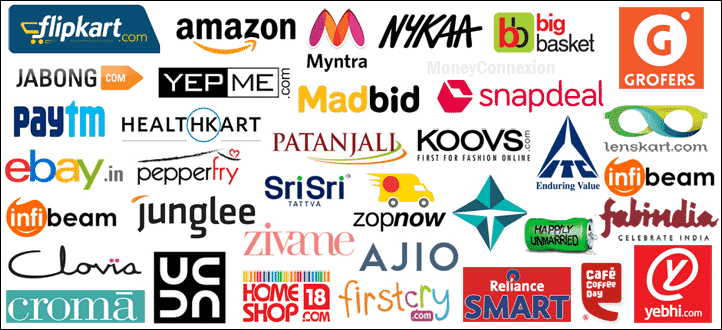
India will have about 600 million Internet users by June 2018, studies by Internet and Mobile Association of India and Indian Market Research Bureau indicate. Urban India with an estimated population of 444 million already has 299 million (60 percent) using the Internet. There are literally hundreds of shopping sites out there and it’s really difficult to cut through the clutter. There are sites that cater to everyone – the all-encompassing jack-of-all-trades providers and then others that are super niche – selling only flowers or lingerie. We doubt flowers are of much interest to you though. Here we feature a rather comprehensive selection of sites that are relevant to you, our geeky reader. For any site to be featured here it had to meet one criteria - it should sell products that are of interest to our reader.
online shopping sites

Rural India, with an estimated population of 906 million (2011 census), has only 163 million (17 percent) Internet users. Thus, there are potential approximately 750 million users still in rural India who are yet to become Internet users, if they are connected, the report adds.

Over 100 million Indians will have made at least one online purchase by end-2017 as compared with 69 million in 2016, a joint report by Associated Chambers of Commerce and Industry of India and Resurgent India states.

CURRENT E-RETAILING SCENARIO

Healthy growth in previous years and projections indicating boom time has led several companies to launch e-commerce websites. Traditional favourites retained their hold while newer ones consolidated their market position.

Top 60 Online Shopping Sites in India

online shopping sites

You may have heard about top 10 online shopping sites in India, but here I am going to show you 60 best shopping sites where you can buy unique kind of products with cheap price tags.

1. Amazon India:

This is by far the most popular online shopping sites in India. Reputed for superior products, services, delivery and returns policies, Amazon India brings to this country a truly international online shopping experience. You can buy almost all products from Amazon with great discounts.

2. Flipkart:

This online shopping website is India’s own. It is fast becoming popular outside the country too, thanks to excellent product range and highly competitive rates. Flipkart has unbeatable reach in semi-urban and rural India, thanks to its extensive delivery network.

3. Paytm:

Riding on back of the fastest growing eponymous payment app, Paytm now ranks as a top online store. For those averse to using credit/ debit cards and net banking, Paytm offers the best solution. Buyers can pay through Paytm app. Shoppers can download the app on their PC, laptop or mobile from this store, recharge for the required amount only and pay.

4. Snapdeal:

Featuring innumerable products from over 800 categories, Snapdeal has emerged as top destination for online shoppers in India. Great discounts are available 24x7x365 on this online store. Fast delivery schedules and flexibility of payments has helped Snapdeal grab leading position in India’s online shopping sector.

5. eBay India:

For customers looking for unique stuff, eBay India offers great solutions. eBay has some two million registered users. eBay sells new stuff and facilities bidding for certain products too. It serves as channel for retailers in various parts of India to connect with buyers across the country. eBay is a great online shopping site if you are looking for products not stocked by others.

6. Zivame:

Founded in 2011, Zivame is a best online shopping site for women which is exclusive to lingerie & innerwear. The website has set trends in encouraging women to shop for lingerie without inhibitions. At Zivame, women can look at buying innerwear from latest trends worldwide.

7. Jabong:

You can buy anything from a trendy scarf to down-to-earth formal wear at Jabong. The online store is popular among online shoppers of all ages. Jabong has dresses and accessories to suit various needs- casuals, formal, sportswear, action wear and ethnic fashions. It boasts of a selection to meet myriad social and cultural needs of Indians.

8. ShopClues:

This is an online store for discerning customers. ShopClues assures superior quality and guaranteed original products. It procures merchandise directly from manufacturers, which enables you to buy the latest launches at competitive rates. Buyer protection is assured with ShopClues.

9. Myntra:

Myntra can truly be called the undisputed leader of online shopping site for fashionwear. Myntra is known for pioneering readymade garments and fashionwear retail segment of India. This online portal offers everything required to complete a wardrobe. Myntra’s end of season sales is huge draw among fashion aficionados

10. Nykaa:

Bollywood has a far reaching impact on India and Nykaa, the online store, brings this experience to life. You can find fashion garments, dress accessories, cosmetics, fragrances and a host of other requirements required to appear like a hero or heroine.

Other top 50 online shopping sites

So here are other 50 sites where you will not only find unique products but heavy discounts on products as compared to the above top 10 sites.

11. Bigbasket:

Often referred to as India’s biggest online grocery shopping site. Bigbasket allows busy people to shop for their groceries from any location, choose the time and date of delivery to suit convenience and sells very high quality stuff. There are many other grocery shopping sites similar to Bigbasket and if you are a first time customer, you can find best deals.

12. Pepperfry:

Moving to a new home or office is often tardy. Home and office owners are confronted with wide choices of décor and furnishing products. Prices and quality swings wildly. Pepperfry helps overcome these hurdles. This online store offers your home and office needs at excellent, competitive rates and assured quality. Home delivery ensures you do not need to arrange transportation of fragile and delicate items yourself. You can also buy online furniture from UrbanLadder, Hometown etc.

13. Limeroad:

Home furnishings, readymade garments, dress accessories are all on offer at Limeroad. Reasonable prices make Limeroad a great destination for shopping online.

14. UrbanClap:

UrbanClap is recognized as the fastest growing start-up in India. Here, one can hire any service from yoga and fitness instructors to plumbers and secretaries.

15. Clovia:

A global brand of clothing for women. Clovia offers a wide selection of bras, panties, nighties, dresses, bridal wear and other female stuff.

16. Junglee:

This is not a really popular shopping website. But its credentials and business can propel it among the top five. Junglee.com is a service by Amazon designed uniquely for India with the vision of helping anyone buy and sell anything online. Junglee is the only online marketplace in India which enables customers to buy new and used products from all types of sellers including individuals, home-entrepreneurs and micro-businesses.

17. Koovs:

Fashionwear meets perfection at Koovs. Buy here for that exclusive stuff that nobody can imitate. Excellent dress accessories are also available at Koovs, a leading online store for trendsetters.

18. Yepme:

Men, women and kids of all ages will find apparel of their choice at Yepme. The online store offers great discounts all through the year and is fast emerging as destination of choice for fashion aficionados.

19. Grofers:

Anyone who believes that buying groceries online is expensive should visit Grofers. The website lists tens of thousands of products, from the humble packet of table salt to exotic selection to delight a connoisseur. Grofers offers superior grocery items at reasonable prices with assured timely delivery. Other preferred grocery shopping sites are Nature’s basket, Reliance fresh etc.

20. Rediff:

As a pioneer in India’s online stores, Rediff has continued to maintain its presence in the market, albeit with some challenges. Rediff has a following of dedicated clientele who also patronize its excellent email services. Rediff is a great online shopping site to buy Indian handicrafts and electronics.

21. ZopNow:

Designed for families with little time for wasting on grocery shopping at crowded stores. ZopNow offers a wide selection of groceries and fresh food. Prices are designed to suit every budget. Online grocery shopping assumes newer dimensions with ZopNow.

22. HealthKart:

As suggested by the name, HealthKart is all about health and fitness. Looking to lose or gain weight, this website offers a range of products for every need. HealthKart features products from renowned and established manufacturers only, which ensures any supplement you take meets and exceeds international standards.

23. Lenskart:

Wearing glasses was considered a sign of ageing or frowned upon by the young. Lenskart has changed this perception. It offers a wide range of fancy and fashionable frames and lenses that make wearing glasses a pleasure. Special offers are always available on premium brands like RayBan, Police, Dior etc. at Lenskart.

24. MadBid India:

MadBid India is the local versions of the larger, international online shopping store. Unlike conventional online retailers, MadBid allows buyers to bid in auctions of various products ranging from gardening equipment, office requirements, mobile phones, practically everything. Shoppers have to buy prepaid credit for bidding. The website claims to have offered very expensive items at throwaway rates. MadBid is unique too since one can buy products from abroad.

25. Infibeam:

One of the fast emerging online stores of India. Infibeam sells a variety of products from home appliances, mobiles, laptops, clothes, watches, cameras, to books, home furnishing products, footwear and more. The Infibeam’s motto of ‘Shop with a Smile’ is aptly reflected in its product and service offerings, and prices.

26. ITC Portal:

This Indian giant traces roots to colonial India. Established August 24, 1910 as Imperial Tobacco Company, it primarily manufactured cigarette and tobacco products for domestic consumption, exporting to British colonies and elsewhere. Today, the US$ 45 billion business group, known as ITC has diversified into food, hospitality and other sectors. A wide selection of ITC’s non-tobacco products can be bought at its online store.

27. iBhejo:

Makes buying products from USA very convenient for shoppers in India. iBhejo is an online store that permits people to buy any American product, from home furnishings to office requirements, stationery and mobile phones from India. You pay in Indian Rupees and your order is doorstep delivered, after clearing all Customs and import formalities at no extra cost.

28. Patanjali Ayurved:

A few years ago, nobody would have dreamt of an Indian herbal products company gaining global acclaim. Patanjali Ayurved, launched by Dehra Dun based Patanjali Foundation is slated to become India’s first global brand. The online store offers everything from purest spices and proven Ayurvedic formulations to soaps and herbal cosmetics. You can also buy grocery at this online store. An added attraction is, books, magazines and DVDs containing instructions to learn Yoga from renowned guru Baba Ramdev are also available here.

29. SriSriTattva:

The worldwide popularity of unadulterated spices, pure grocery items and herbal cosmetics has made SriSriTattva a major Indian online store. Here one can buy grocery products, herbal medicines, cosmetics and loads of other stuff that carry the hallmark of purity. This online shopping site is relatively new and was launched by The Art of Living Foundation, Bengaluru, founded by world famous Yoga guru Sri SriRavishankar.

30. Croma:

From the reputed Indian corporate giant, Tata Sons, online store Croma has the widest range of high quality electronic products in India. The online store is also India’s first multi-channel facility for domestic electronics and home appliances.

31. TataCliq:

Also from the house of Tata, the TataCliq online store is excellent for shopping readymade garments, toiletries and home linen, among other requirements. It caters to tastes of all generations of Indians, selling ethnic Indian garments as well as regular readymade clothing, dress accessories and lots more.

32. Naaptol India:

Naaptol is the pioneer of teleshopping in India. It features products that are widely advertised on the eponymous TV channel and commercials. It has become India’s first comparison based social shopping website. Naaptol offers very competitive rates are through its online store.

33. Nature’s Basket:

This online store website was launched by India’s renowned business group, Godrej. Nature’s Basket offers the best varieties of food that one can buy. Reasonably priced, fresh and value-for-money for discerning shoppers, Nature’s Basket is often referred as a gourmet’s online store.

34. Giskaa:

The principles of health, environment and social responsibility come alive at Giskaa. This online store sells eco-friendly and natural products from forests of India. These products give a feeling of being one with nature.

35. Homeshop18:

Tracing its evolution to heady days of cable TV in India, Homeshop18 continues to retain its position as a market leader in online stores. Homeshop18 products are usually advertised on its channel, website and mobile app. Economical rates and off-beat products are specialty of Homeshop18.

36. Future Bazaar:

Not exactly a store because Future Bazaar is unique concept. It features gift vouchers to give on special occasions or just for fun. You can buy a gift voucher worth any amount. Two types of vouchers are offered: for purchases at Central branded malls and Foodhall, the food court.

37. Yebhi:

Fashionwear packaged uniquely is Yebhi’s specialty. Instead of promoting a brand or clothing item, Yehbi sells the entire ‘look’. The website is rather complex since it features several products listing intricate details. A good online shopping store for the fashion conscious.

38. Ajio:

An opportunity to buy fashionwear from leading international brands is offered by Ajio. Top local brands also vie for attention of online shoppers. Ajio is a trendy online store aimed at fashion conscious folk.

39. Fabindia:

The online store lives fully to its catch-line ‘Celebrate India.’ Fabindia is no stranger to Indians and foreigners. The brand is renowned worldwide for high quality cotton clothing, furnishings and other great stuff. Fabindia’s online store is equally famous among shoppers.

40. The North East Store:

An initiative by two former employees of Google, The North East Store brings to the world, the exotic world of India’s seven sister states and more. Hand woven bags, pickles made from the world’s hottest chili, BhootJolokhia and other exquisite, rare products are available here.

41. Archies Online:

Looking to greet anyone or send a gift for a special occasion, Archies, the premier gifting and greeting shop of India makes it possible online. You can place your order and have the gift delivered to the recipient’s doorstep.

42. Khadi Natural:

The drive by Prime Minister Narendra Modi to promote Khadi or homespun fabric and handmade products finds expression on this website. Customers at this online store can buy Khadi garments, gift items, herbal cosmetics and lots more.

43. RelianceSMART:

‘Happiness Delivered Home’- the promise of RelianceSMART. A great online store for grocery and home requirements. This website comes from India’s corporate giant, Reliance. Quality of products and rates are excellent.

44. Just Herbs:

Making a strong presence in Indian herbal skin and beauty products is Just Herbs. The company makes body and beauty preparations from herbs collected across India. It also ships these products abroad.

45. Shahnaz Husain Group:

The pioneer of India’s herbal beauty treatment, Shahnaz Husain, the world renowned beautician offers her signature products online. The online store carries details about every product personally developed by Shahnaz including its composition and uses. The live chat feature helps people get information about any product they wish to buy.

46. Brindco:

A great online store for connoisseurs. Brindco has an excellent selection of imported wines from France, Italy and other European countries. Prices begin at Rs.3,000 onwards. This is not exactly an online liquor store. Brindco caters to wine aficionados, who enjoy the drink for its craftsmanship. Delivery may be restricted in some parts of India with prohibition.

47. Flavours Of My City:

Regardless of which part of India you live, Flavours Of My City delivers a taste of your hometown right to your doorstep. Whether its exotic tea from India’s North Eastern states and Kashmir, spicy snacks of Maharashtra, delicate sweets of Rajasthan or intricate dishes of South India, this online store covers India completely.

48. Firstcry:

Asia’s largest online portal for Baby and kids product. We have over 2 Lakh+ Baby and Kids items from 2,000 and more top International and Indian brands including Mattel, Ben10, Pigeon, Funskool, Hotwheels, Nuby, Farlin, Medela, Pampers, Disney, Barbie, Gerber, Fisher Price and MeeMee, among others. You can also buy the same products from another popular site BabyOye.com.

49. MeatRoot:

Also comes with delivery restrictions limited to Pune and surrounding areas. MeatRoot is an excellent indicator of how India’s online shopping is shaping for future. MeatRoot offers frozen and fresh seafood, exotic and regular meat in choice cuts as well as ready-to-cook products from renowned manufacturers.

50. Titan Jewellery:

From the house of Tata, this exclusive web store is a virtual treasure trove. Buying masterpieces of jewellery for a special occasion, gift or daily wear stands redefined by Titan. Plain jewellery, those set with precious stones are all available online here. The range on Titan extends to eyewear, wallets and dress accessories, fragrances and lots more.

51. Bullion India:

For retail investors and gold lovers, Bullion India gives a wide selection of gold coins, bars and chips for online purchase. This online gold store is operated by Finkurve Bullion Pvt. Ltd, an Indian financial house. Pure 24karat gold coins and bars are available for purchase at this online store.

52. Happily Unmarried:

Life as single is really fun. And Happily Unmarried adds sugar and spice to this. The website has unique products that cannot be easily found elsewhere but can be proudly flouted by singles- much to ire of their married counterparts.

53. AdultProductsIndia:

Strictly for adults. The website lives up to its reputation. Toys and products that were secretly desired by adults to satisfy carnal pleasures were smuggled into India earlier. AdultProductsIndia offers a wide selection of these locally, at attractive prices. Discreet packing and delivery is ensured. Similar to this is ImBeshram is another website whose brand face is Sunny Leone.

54. PlaceOfOrigin:

A unique concept in sweets and savouries, PlaceOfOrigin helps you buy sweets and snacks from various parts of India. You can buy sweets from famous stores including Haldiram and Brijwasi as well as those from very ethnic, special stores in smaller towns.

55. Indian Ordnance Factories:

This is definitely not a shopping sites for everyone. Here, firearms license holders can buy a variety of guns, pistols and revolvers made by the government owned Indian Ordnance Factories. Civilians can download application forms to buy select guns and ammo from IOF. Purchases cannot be made online but you can apply for buying a gun or ammunition and track your orders.

56. Decathlon:

A pioneer in sports goods sold online. Decathlon features more than 5,000 products for over 50 sports. High quality sports goods made in India and abroad are available on this website.

57. Funcart:

Despite its recent origins, Funcart has emerged as India’s leading online store for party supplies. Planning for anything- a birthday party for kids to corporate parties for multi-nationals, Funcart has everything to host a party.

58. FengshuiIndia:

Anyone who wants to attract positive energy at home or office will find FengshuiIndia a very useful website. It offers a wide array of Chinese Feng Shui and Indian Vastu Shastra paraphernalia.

59. Netmeds:

No other Indian retailer has evoked so much controversy as Netmeds. It is an online pharmacy in India. Customers buying medicines are offered a 15- 20 percent discount on orders. You need to upload the doctor’s prescription and place orders.

60. Café Coffee Day:

This chain of coffee shops offering healthy drinks and mouth watering pastries now offers a selection of exquisite coffee powders, mugs, teas and other gear required to enjoy your cuppa. Prices are unbeatable.

Note: This article lists popular online shopping sites at random. Search engine rankings and other parameters are not considered. The list does not indicate popularity or otherwise of any website or online store.
There isn’t a single entrepreneur out there that can’t benefit from some extra inspiration and motivation. We can all learn something by following successful individuals. It sparks inspiration and learning from their real-life business experiences can help us all on our own entrepreneurial journeys.
Read More
Next PostNewer Posts Previous PostOlder Posts Home