Meet The Author

Main Uddin is one of the pioneer blogger cum e-marketer from North East India(Assam).He is also a Skilled web Developer and regular columnist for various news portals around the globe.Read More

author

Evergreen 7 Secrets to Write Epic Content for Blog and Website

Leave a Comment
Do you struggle to write some compelling posts? I know: it’s quite hard to keep writing quality posts.
Of course, you can write a compelling post once in a while, but you find quite hard to replicate your success. You are wondering how some bloggers can make so many fantastic articles. 

Evergreen 7 Secrets to Write Epic Content for Blog and Website


Right when you think that one of them just made his best post, he shows an even better masterpiece!

How can they get a standing ovation for each post?

You’d like to know their secrets – as people want to know the Coca-Cola secret ingredients.
You are pretty sure that they know something that you are missing out. You want to consistently make the same epic posts that they make. That kind of posts can help you to achieve the success you want – engage your audience, get more comments and shares, be recognized as an authority, get backlinks and many more.

Maybe I got some good news for you , But, before let me ask you one question:
How Much Time Did You Invest in Your Last Post?

45 minutes?
1 hour?
2 hours?

It sounds like a lot of time. After all, it was just one post. Do you know how much time I invested in my last guest post for Firepople Marketing?

About 20-30 hours!
Ok, that was an insane post, but most of my posts take me many hours. I’m not the only to do that: many successful bloggers invest many hours in their posts.

Epic Content Requires Time

If you want to make something epic you have to spend time on it. You can’t avoid that. If remarkable goals didn’t require time, everyone would accomplish them, and they wouldn’t be truly remarkable.
That works for your posts, your podcast series, your videos and your roast – especially I would put much time in the roast: crude meat is quite unhealthy, and it has a horrible taste!

How to Write Epic Content Step-by-Step

Time and energies are crucial to make an epic post, but if you don’t use them in the right way you’ll waste them. My motto is “the best results with the least effort”. I want to share with you the way to maximize your efficiency, so you can make your best posts without selling your soul. I outlined the 6 step process that I use every time I want to make an outstanding post.

1. Find One Problem

All starts with problems. If there weren’t problems, we wouldn’t need to solve them! People search information to solve their problems.  People search solutions to their problems. The best thing that you can do is to give people what they want.

Why do you think I’m writing this post? 

I’m writing it because you want to know how to produce impressive content. To make something extraordinary you have to give value to people. To give value to people you can do two things:
Solve their problems
Give them good emotions
If you can accomplish both of them, you are going to win the full jackpot. Focus on solving problems because it’s the most effective approach in content marketing – if you want to sell your stuff, this is preferred approach. Anyway giving good emotions can work well in certain niches, like the entertainment one.

You may wonder: “How do I find the one problem to talk about?

You have countless ways to find the answer:
Read the comments on your blog.
Read the comments on other blogs.
Think about the problems you encountered.
Look at successful products/courses
Ask to people
With these few suggestions you have potentially infinite problems to write about.

2. Offer the Solution

Ok, now that you know that people have a certain problem you want to offer them the solution(s).
If you just write about the problem, but you don’t offer the solution, people won’t pay attention to you.

Try to offer an excellent solution.
The more practical your solution is, the better it is for people.
Add as many details as you can.
Assume that people who read your stuff don’t know anything about that topic. Step-by-step solutions are what work the best – did you notice that this post is a step-by-step solution to one problem? 

Offering a solution means that you already applied what you say and that it works. There is no way you can skip that. Don’t suggest something that you didn’t try: it won’t work. That lead us to say that you need to solve a problem by yourself before you can talk about that.
If you can’t solve your problem, you won’t help other people with that problem.

3. Edit your post

Once you finish your post, read it and re-read it. While you are writing you may make many mistakes. It’s non-negotiable: you have to edit your posts. Especially if you are writing in a non-native language you need to put much attention in this step. I’m not a native English speaker so I need to edit my posts carefully once I write them. Sometimes I spend more time editing a post than writing it. Even if you write in your native language, you can always re-write some of your sentences better. You can add something that you forgot or you can improve the structure of your post.

4. Include Images, Videos and Links

Do you want to make a masterpiece? If you do, you need to enrich your posts. Think about your post like a Christmas tree: you have to put many decoration on it. Images, videos and links are your decorations. With images you can better explain your concepts and your ideas.
As you know “One picture is worth thousand words”.
Don’t insert random images that distract your visitors, insert relevant images that add value to your posts. Videos work even better than images for explaining your concepts. If you can insert a relevant video to your posts, do it. The best examples, to help you understand the role of videos, are tutorials: a written tutorial is not as useful as a video tutorial.

The last decorations are links. Links are perfect to give people additional information. You can’t know everything, so it’s ok to provide other useful sources of information. To provide the maximum amount of value you should tell people where to find complementary information. Notice that not only links to other blogs are useful, but also interlinks improve the quality of your content (interlinks are links between the posts on your blog).

How many images, videos and links should you add to your posts?
It depends. Your goal is to make an exhaustive post, so insert as many links, images and videos as you need to reach your goal. Sometime it takes 2 links; sometimes it takes 5 links, 8 images and 1 video.

5. Forget About Your Post

Once you complete the 4th step, your post is complete, but wait, don’t publish it. It’s complete, but it’s not the best post you can make , You can bring it even further. Right after you finish it, you can’t see what you can improve. Don’t worry, it’s normal: you just need a break.

Take one entire day of break from your post. ENTIRE DAY. In this way, you’ll take off your mind from your post. That will bring you an objective perspective when you examine your post.
Your mind will also produce fresh ideas. Work on something else…or just go to the park with your friends/kids/pets.

6. Improve Your Post

After the day off from your post, you have a detached point of view to better analyze your work.
Start with a calm and slow reading. While reading try to adopt this mentality: “If I didn’t know anything about the topic of the post, what would I understand and what would seem confused?”.
That mentality will help you to make your post so clear that even people who are not really familiar about the topic will understand.

The clearer your post is, the better. Once you finish reading and changing your post ask yourself the following questions: What can I do to better communicate my ideas?
How can I improve the post?
Can I make the content better than it is now?
Is there anything that I forgot?
Answer those questions and you’ll surprised by the improved version of your post.

7. How Much Time Will the 6 Steps Take You?

I guess that you already know the answer: it depends. You may need 2 days to write your post or you may need an entire week.
Don’t rush, take your time.
It takes the time that it takes.

Ok, using this strategy you’ll publish fewer posts, but I can assure you that the quality of your posts will dramatically improve. That will translate in more shares, more readers, more comments and more backlinks. Try it, you’ll touch the results with your hands.

What are your biggest issues when it comes to make high quality content? What is holding you from reaching the sky? Let’s talk in the comments, I’d love to hear your thoughts.
Read More

Tracking the Economic Slowdown in this 2008

Leave a Comment
The media’s coverage of the troubled economy has shifted repeatedly in the last year from a narrative about mortgages to one about recession, a banking crisis and now largely gas prices—a changing storyline and one that differs from medium to medium.

Tracking the Economic Slowdown in this 2008

 Moreover, the connection between media coverage and economic events has often been uneven. Sometimes, coverage has lagged months behind economic activity, when the storyline was dependent on government data. Other times, coverage has tracked events erratically, as with housing and inflation. But when the story is easier to tell, as in the case of gas prices, coverage has been closely tied to what is actually occurring in the marketplace.

 These are some of the findings of a new detailed examination of how the American news media have covered the economic slowdown over the last two years, produced by the Pew Research Center’s Project for Excellence in Journalism. The economy has been a bigger story in older media—print, the three network evening newscasts and traditional news radio—and a noticeably smaller one in the newer—the more opinion-oriented platforms of cable TV and talk radio. The relationship between media coverage and public concerns about the economy is a complex one. Going back to late 2007, Americans’ attention to the issue generally outstripped the level of media interest.

While the public considers the economy its No. 1 concern, for instance, the media have been far more interested in the presidential campaign—by a factor of nearly 5-to-1 between January 2007 and June 2008. But it’s also true that public attention to the story and pessimism about the state of the economy both grew as the media began to pay more attention in 2008. The PEJ study is based on an analysis of more than 5,000 economic stories from January 1, 2007, through June 30, 2008, drawn from approximately 1,955 hours of programming on the three major cable news channels, 1369 on network morning and evening TV, 978 on radio, and 469 days’ editions of 21 different newspapers, and the five leading news websites, some 48 different news outlets in all.

 Among the study’s findings: Overall, the economy has been the No. 2 story so far in 2008 in the U.S. media, moving ahead of the Iraq war. But coverage has not come close to that of presidential campaign. For the first six months of this year, the various storylines that make up the story of the economy, including rising energy costs, have filled 8% of the newshole studied by PEJ. The next biggest story was events inside Iraq at 3%. The race for president, by contrast, has filled 37% of the newshole. Often the press coverage has lagged behind economic events, sometimes by months. In the first quarter of 2008, for instance, media attention to a possible recession began to spike, though in reality the economy was strengthening some, because economists were arguing about data from the last quarter of 2007.

Then, as the economy began to weaken again in the second quarter, the media narrative shifted away from concerns about an economic slowdown. The only change in the economy that reliably predicts more press coverage in the last year has been rising gas prices. While public attention to economic news does not always translate into more coverage, more coverage of the economy can be correlated to deepening public worries. After press coverage of the economy jumped in the first quarter of 2008, the number of Americans who considered the economy to be ailing doubled.

The economic picture improved slightly during that period. What Americans know about the economy, and how much they know, also may vary based on what media they consume. Parts of the economy are a bigger story in one medium than another, and some media are generally less concerned overall. Gas prices, for instance, are a bigger TV story.

Banking and housing are bigger in print. And unless there is a clear political wedge issue to argue about, the economy does not tend to become much of story on cable news or on talk radio, at least not during the key time slots when most people are tuned in. Since January 2007, the economy has been about a third as big a story on cable news and talk radio as in newspapers and on network television.
Read More

Best Ways to Market Your Small Business on a Blogging budget

Leave a Comment
When budgets are tight, marketing might be the first expense you look to cut.While traditional advertising methods are costly and hard to measure, small businesses have never had greater access to cost-effective, trackable marketing tools.Relationship marketing is about forming long–term relationships and focusing on customer loyalty. It stands in contrast to the more traditional transactional marketing approach, which focuses on increasing the number of individual sales. In the transactional model, a customer may be convinced to select your brand one time, but without a strong relationship marketing strategy, the customer may not come back in the future.


Let me stop you right there.

 It’s like with people. We want to spend time with those who we have a great relationship with and who care about us, rather than with people we don’t know anything about and whose communication style is official. If it’s so obvious, it’s hard to understand why some brands seem to don’t get it.

But with so many digital tools available, how do you know where to start?

Email marketing is the tried and true digital marketing channel with an average return of $38 for every $1 spent.

If you’re brand new to email marketing, you can try it out for free! Sign up for your free 60-day trial of Constant Contact here.

Email and social media marketing are just the start. Here are ten marketing strategies that can help you market your small business on a shoestring budget.

1. Craft an elevator pitch
You should be marketing all the time — wherever you are. Therefore, you need a compelling elevator pitch.

Research shows the average attention span of an adult is about six to eight seconds. That’s all the time you have to grab someone’s attention.

If you successfully engage them, then you only have a little over a minute to really sell them on your product or service. Invest the time to craft a killer elevator pitch. The return on your investment will pay huge dividends in terms of creating business opportunities.

2. Leverage your community
You don’t have to think big when it comes to your marketing efforts. Think locally. What’s going on in your community?

Sponsor a Little League team or a 5k charity walk/run. Print bookmarks and leave them at the local library. Get to know your ideal customer and think about how and where they spend their time.

Then search for opportunities to get in front of your customer with your marketing message.

3. Collaborate
Put together a group of synergistic, non-competitive businesses in your area and agree to cross-promote.

You can use coupons, fliers, reciprocal website links, bundled promotions or social media platforms. By collaborating with each other, you can expand your customer base because you’ll be reaching new people.

4. Network
I’m a huge fan of networking. I don’t think there is any better way to build a business than to get out there, shake some hands, and get to know people.

Networking requires a time commitment and it doesn’t provide instant gratification, but a strong network is one of the greatest assets any business person can have.

5. Give a speech
A lot of people hate public speaking. However, there are many organizations looking for qualified, subject-matter experts who can present to their groups.

Take a deep breath and volunteer. You don’t have to be a pro as long as the information you share is helpful to the audience. And the upside — the more you do it the easier it gets. Plus, it positions you as a credible authority in your field.

6. Create buzz
I started my corporate career in the field of public relations and the business has changed significantly because of technology.

Today, a small business owner can accomplish a lot without hiring a professional firm. Subscribe to Help a Reporter Out. You can respond to reporters’ queries that are looking for story ideas and resources. Some are small media opportunities, but others are major media outlets that use this service too.

7. Ask for referrals
Don’t be shy about asking for customer referrals. The majority of people say they are willing to provide a referral if asked, but very few take the initiative to do it on their own.

Referrals make it easier to get in the door with new customers. If you aren’t asking for them, you are missing opportunities.

8. Build relationships
It is a lot less expensive to keep a customer than it is to get a new one. That’s why establishing strong relationships with your customer base is crucial. One of the ways you can do that is by keeping in touch with people through email marketing.

Ask customers for their email address when they visit your store or website. Then, make your communications informative, helpful and professional — something your customers will look forward to receiving.

9. Offer coupons
Coupons are a good way for many businesses to attract new customers. Research shows that people will go out of their way to use a coupon, proving that this method is successful in expanding your customer base.

Coupons can also generate return visits. For example, if you give a customer a coupon for a discount to use on future business, there’s a high probability they’ll be back.

10. Give it away
If someone has the opportunity to experience your product or service, chances are they will want to purchase more.

Don’t be afraid to give someone a free trial or a sample. In today’s economy, people are more comfortable purchasing something they have been able to experience first.

These ten, inexpensive marketing strategies will help you engage customers, build relationships, and ultimately keep your brand top-of-mind. It’s not always about the money you have to spend on marketing, it’s about the time and effort you put into it and above all, the relevance it has for your customers.
Read More

What is Next for the Ethnic main stream Media

Leave a Comment
While much of the US news media have endured shrinking audiences in recent years, segments of the ethnic media have seen significant growth. One industry group has found that the number of Hispanic daily newspapers alone has grown from about 14 in 1990 to more than 40 in 2004. Capitalizing on the expanding Latino market, US English-language companies have been buying up or starting their own ethnic outlets as well – consider NBC’s purchase of Spanish-language broadcaster Telemundo or the Tribune Company’s Hoy! newspapers. One thing all media organizations have certainly noticed is that the US immigrant population – peopleborn in other countries — has jumped from 19.8 million in 1990 to nearly 36 million in 2005. Beyond the Spanish-language media, there is also some evidence that other ethnic media are growing as well.

What is Next for the Ethnic main stream Media

National figures for circulation and usage are hard to find, but a series of surveys by pollster Sergio Bendixen have shown that immigrants often prefer news in their own language on television, radio and in print. (A 2005 Bendixen poll found that about 29 million adults in the United States preferred using ethnic media, rather than mainstream outlets, for their information.) There are still challenges ahead for the ethnic media, however. A 2003 Pew Hispanic Center surveyshowed that second- and third-generation immigrants move away from their native language and toward English as their primary language. And the recent $12.3 billion sale of Hispanic broadcasting giant Univision to a group of private investors raised questions about whether former owner A. Jerrold Perenchio was motivated by concern that ethnic media growth might be peaking. In this, our seventh in PEJ’s series of nine roundtables with industry experts on the future of the news media, ethnic media professionals believe several crucial factors are working in their favor.

All seem to agree that while conglomeration is the standard in the mainstream media, the niche audiences that ethnic media reach have a real value in an age of cultural segmentation. At the same time, they argue the ethnic media are not pushing their users into a different, non-English-speaking America – rather they are building a bridge for new Americans who are often undeserved by the mainstream media. The panelists for this roundtable are: Sandy Close, Executive Director, New American Media a nationwide association of over 700 ethnic media organizations Ahn Do, Editor, Nguoi Viet 2 News Juana Ponce de Leon, Director, Independent Press Association of New York Edward Schumacher, Publisher, Rumbo Newspapers a chain of Spanish-language papers in Texas 1.

What kind of role has the ethnic media played in this year’s immigration debate and if it has, does that role signal a larger change for the ethnic media in the years to come? Edward Schumacher: The Hispanic media has been a leader in the movement and debate. Radio, led by on-air personalities, particularly for morning drive time shows, played an unusual activist role in urging listeners to march or boycott. Many radio stations acted more like stations in Latin American than here. TV backed off to play it neutral, but the extensive coverage by itself spread the word. Newspapers editorialized heavily in favor of immigration reform and presented the news in a light sympathetic to illegal immigrants. That said, most of the Hispanic media seemed to recognize the need for improved, or at least more rational immigration controls. The ethnic media gets ever more attention from mainstream political leaders. Juana Ponce de Leon: Without question, the ethnic media has been a driving force in the immigration debate. If we are to judge by the massive demonstrations of immigrants across the country calling for a comprehensive and just immigration reform, you can count on the fact that they were kept informed on the nuances of the immigration reform debate, as well as the preparations for the protests. Ethnic media is the only print media sector that is growing in the United States. According to a poll conducted by Sergio Bendixen for New California Media in June of 2005, one in four people in this country use the ethnic press as a primary source of information.

This will only get stronger as the ethnic media develops coalitions and alliances across ethnicities and sees itself as an important media player. Ahn Do: Immigration is a topic constantly covered in ethnic media, particularly in newer immigrant communities such as Southeast Asians. So we’re going to monitor the changing developments on this beat, and we’re going to speak up, speak out, or speak in favor of whatever happens affecting borders, citizenship, identity and race. It’s one way to share our voices, engage and take part in the larger debate. Ethnic coverage has enlightened readers and helped them to grasp that this is not just a Latino-only issue in that it affects huge segments of the population, including those who are dependent on current U.S. citizens and waiting for visas to resettle here. Sandy Close: The massive immigrant rights demonstrations brought attention to the role of ethnic media – not just deejays but an entire eco-system of media vehicles serving ethnic audiences, from street DVDs to Univision, from Spanish-language to hip-hop to Vietnamese. The role ethnic media played in informing and engaging and mobilizing audiences was not new. 2. A lot has been made of the growth in the ethnic media, but the numbers last year indicated a drop in circulation at some Hispanic newspapers and now Univision is possibly looking for a buyer. Are the ethnic media in for a slowdown? Have they peaked? Edward Schumacher: I see no generalized drop in circulation in Hispanic papers and in fact see the reverse: continued growth. I do so see a move to free papers, but that reflects a general trend in the mainstream industry. In many ways, Hispanic papers are on the cutting edge and cutting to the chase: mainstream metro papers, outside the national papers such as NYT and WSJ, are being whittled by inflation down towards free or irrelevant costs, and may never have the pricing power to raise newsstand rates.

The sale of Univision has nothing to do with the future of the industry. Its purchase by its current owners was a financial play, not a strategic one, and the sale now is nothing more than an orthodox financial flip. Not selling would raise more questions, at least in the finance world. Juana Ponce de Leon: While the corporate Hispanic media may be experiencing the same print distribution woes as the Anglo publications, there is a robust growth in local/community Hispanic papers. The local papers do what the corporate papers can’t: they inform the community of their own issues and local happenings and help organize the community by pointing its readers to service sources and connecting them to the larger society. As long as there is an immigrant inflow to the US, there will a need for these newspapers. They meet that demand. Ahn Do: Ethnic media, like in other industries, compete within its own ethnic group and the mainstream for dollars and market penetration, and there will be failures, wild successes and consolidation. The organization that thrives is the one that’s able to blend different worlds, move between worlds, maintaining its own editorial and community-outreach balance in its own world. Sandy Close: The remarkable growth of ethnic media over the last two decades has occurred with very little investment from those entities that have long sustained mainstream media: big business, government, academia and philanthropy. It hasn’t even begun to feel the impact of investment from these “Big Four” investors, and when it does, it will grow even more robust. The Hispanic media experiencing decline in circulation may be those without strong roots in local communities – or those that have found ad revenues drained by competing Hispanic TV and radio outlets. Overall, the Pew Hispanic Center polling found that audience for Hispanic print is rising as the number of media outlets expands. When Viet Mercury was closed down by Knight Ridder in San Jose, virtually all but one of the independent Vietnamese language media outlets that predated Viet Merc were still operating. That suggested to me the enduring power of ethnic media when they are embedded in the communities they serve. 3. What are the growth strategies for ethnic media that serve smaller populations? The Hispanic media have been able to nationalize somewhat.

Is that possible for smaller ethnic groups? Is it important in today’s economic environment? Ahn Do: Growth strategies for ethnic media serving smaller populations? I’d say targeting second-generation readers, boosting online resources, boosting partnerships between ethnic and mainstream outlets and who knows, having an IPO. Sandy Close: Ethnic media play a critical role in the economic vitality of their communities. Without ethnic media, small businesses would find it almost impossible, for example, to grow their customer base. And without small business advertising, ethnic media could not sustain themselves, however committed to serving their communities they are. Growth strategies have got to focus on capturing a fairer share of the advertising dollar from the major social marketers – in particular government agencies – as well as from corporate America and philanthropy. When I hear a foundation advertise itself on NPR as committed to serving the disenfranchised, I wonder, “who are they trying to inform? Why aren’t they branding themselves in ethnic media?” Edward Schumacher: The trend in the media, like the trend in the society, is towards fragmentation: by age, gender, sexual preference, music preferences and a long list of ever more finely sliced segments, not least of which is ethnicity.

Advertisers, too, are looking for targeted niche products. Juana Ponce de Leon: I believe that local papers sprout up where there is a need. I don’t think that there is an organized strategy for growth, however, if you ask to a Pakistani editor in New York about his/her community beyond New York, they will be able to tell you where they are concentrated and which publications serve them. Some ethnic newspapers are actually national, including World Journal, India Express, India Abroad, Urdu Times, Epoch Times, The Forward, Korea Times and Yedioth Ahronoth and quite a few ethnic papers cover national stories and their communities in other parts of the States. Many of the ethnic newspapers are mission driven, they serve as advocates for their community so they identify locally. Perhaps the changing demographics of the United States will dictate the need for communities to consolidate efforts and push for a national presence, in the manner that has happened with Hispanics papers. 4. When the newspaper business was stronger, larger mainstream companies bought up smaller ethnic newspapers. Now that the newspaper industry is struggling, some of those papers have lost funding. Were these alliances and the resources they supplied ultimately good or bad for the ethnic media? Will such alliances be embraced or avoided in the future? Sandy Close: I believe we’re going to see many new initiatives by mainstream media to collaborate editorially with ethnic media or develop specialized niche editorial initiatives (the SF Chronicle’s Pinoy I-pod is one example). Media experiments like the Viet Merc and Nuevo Mundo, launched by Knight Ridder, ultimately helped raise the editorial standard in their respective ethnic media spheres. And their editorial leaders were committed to the principle of serving their communities as sources of news, information and entertainment. But a key role of ethnic media has always been that of “advocate” and public spokesperson. The independent ethnic media that survive despite low ROIs [returns on investment] are those committed to that leadership role that goes above and beyond gathering and transmitting news and information. The banner headline of La Opinion on March 25 was “A Las Calles!” The Lozanos [who own La Opinion] are developing an important model for combining ethnic media embedded in communities and committed to advocacy roles with a growth strategy of building a chain. It’s one of the most exciting experiments out there. Juana Ponce de Leon: I think we are still analyzing the fall out from the Knight Ridder divestiture of its Vietnamese papers. I also know of specific attempted buyouts that did not take place because the ethnic publishers did not wish to be bought out.

 Ahn Do: Alliances between mainstream companies and ethnic newspapers will continue to happen because of the need to share reporting resources, cultural knowledge and marketing know-how. A mainstream company might have an established brand-name, boosting the credibility of the smaller, ethnic publication, but needing to work with the latter to better understand and connect with the assimilating immigrant reader. Edward Schumacher: I believe only Knight Ridder’s San Jose Mercury has pulled funding (of Spanish-language papers), and even then it bought a syndicated replacement. It is way too soon to see the making of a trend there, as by most accounts the Hispanic papers of mainstream companies are profitable and growing. The entrance of the mainstream papers into the market, meanwhile, has been good, in that it has raised the quality bar. On the slip side, many of the mainstream papers are less dedicated to real journalism that reflects the interest of the ethnic communities. They prefer instead to produce light, entertainment-oriented, low-cost weeklies designed as defensive measures to hold on to the virtual print advertising ad monopolies they have in their metro markets. KR’s El Nuevo Herald and La Estrella, Tribune’s three Hoy papers and Belo’s Al Dia are exceptions, in terms of investment and reporting. 5. Some argue that the ethnic media, particularly the more developed Spanish-language media, in some ways actually hold down immigrant populations by allowing them to live in a separate Spanish-language world in the United States. What do you think of this argument? Edward Schumacher: Bull—-. The Hispanic media serves as a bridge to the mainstream, and actively – very actively – works to do so in its content. Hispanic readers are hungry for just such content, and the Hispanic media, far more than the mainstream media, fulfills that hunger. While there may be exceptions I don’t know, the Hispanic media does not push for an officially bilingual country or the retaking of the Southwest by Mexico. The Hispanic media responds to a natural anthropological phenomenon around the world: people prefer to consume media in their mother tongue. This includes music, TV, movies, magazines and newspapers. Americans living in Europe do the same, reading the IHT or WSJE, for example. If the Hispanic media didn’t exist, the English-language media would not capture the bulk of that audience. It simply wouldn’t read or watch much TV. Later generation Hispanics, educated in English, prefer English-language media, as they naturally should. Some may tune into specific television or radio shows in Spanish, or occasionally read a Spanish publication, all for its cultural content, but that is enriching and differs no more than from time-to-time tuning into a blues or pop radio station or reading a surfer magazine, all part of the amazing variety in the US media smorgasbord. We forget that in different times in our past there have been powerful and large newspapers in languages such as German, Italian and Polish. Sandy Close: What paralyzes people is isolation – not just geographic but cultural; a sense of being excluded, ignored, invisible. “Today we March, Tomorrow we Vote!” was a key slogan in the demonstrations, whether in English or Spanish or Tagalog. The message was clear: we’re becoming public people; we’re announcing ourselves as participants in the larger public realm. Nothing could be more American than that, as Richard Rodriguez wrote in “Hunger of Memory”. To become American is to adopt a public persona. Absent a voice and visibility in the media culture of America, you don’t belong. Ahn Do: People tout this argument because they want to live in an English-only world. But the reality is that we’re all working and learning and growing today in an environment that values diversity. The diversity of languages goes hand in hand with that. Juana Ponce de Leon: Immigrant communities need to understand where they are and how it works. Without their local newspapers in their language, this organizing task would be messy and unwieldy at best. Foreign-language ethnic papers serve a vital role for their community.

The assimilation usually takes place organically as the children of immigrants get schooled in English and they assimilate, often serving as a bridge between their parents and the social system. 6. One broad trend we sense in the media culture is the paradox of more outlets covering fewer stories. As the audiences for particular news outlets shrink, newsroom resources are then reduced, but these outlets still feel compelled to cover the big events of the day. The result is more outlets covering those same “big” events and fewer are covering much beyond that as much as they once did. How do you view this trend? Edward Schumacher: It isn’t sustainable. Newspaper chains will move someday to the network TV model, sharing the same national and international stories and possibly whole sections and inserts much more so than today, and there may even be sharing among chains. Meanwhile, the smarter ones will use their freed resources to zig while everyone else is zagging, in addition to improving local coverage. Juana Ponce de Leon: It is unfortunate because it means that there are fewer people and little diversity in the framing of the issues. With the explosion of bloggers and online news venues, if you are English-speaking, you have access to more points of view. Ahn Do: Ultimately, I think the trend here shows a greater need for ethnic media because should those day-to-day stories include issues vital to immigrant lives – but then are missed – we have the newspapers, TV and radio stations in those individual communities on hand to provide news. And the more in-depth, the better. Sandy Close: What is striking to me, as a journalist who started reporting in the Far East during the Vietnam War, is that for all the talk about media consolidation and homogenization of news, it’s the mainstream media outlets today, not the “alternative” press, that are breaking the big stories – from Time Magazine which broke the Haditha massacre story to the WP that broke the story on renditions….By contrast, My Lai was broken by Dispatch News Service, an alternative service of freelance writers. Moreover, the real impediment for journalists is the sheer danger to life and limb of reporting on the ground in places like Iraq, Afghanistan, Sudan.

Were I to practice the kind of journalism I/we did in Vietnam in the 1960s in Iraq today, I’d probably wind up like Jill Carroll or Stephen Vincent, a hostage or dead. This underscores part of the great challenge in trying to sustain the “communal” or “social” role of news – connecting audiences to each other and, more importantly, show where and how they fit into the larger whole. Not just dangerous war zones, but global societies like California’s, with unprecedented diversity, pose the question: how do we reflect who we are becoming as a society, as world? I was at an SPJ-Media Alliance-sponsored meeting in San Francisco last night of journalists talking about the “threat” of media consolidation and everyone emphasized “local, local, local”. As if Afghanistan weren’t absolutely critical to “local” news ( Union City and Fremont represent centers of the Afghan diaspora). Local, in the words of Harlan Cleveland some years ago, is now “glocal” and global is now “glocal.” More than ownership issues, I worry about our capacity to communicate with each other across the unprecedented diversity of the global society in which we all now live.
Read More

New numbers for blogging and blog readership

Leave a Comment
Because blogs have been in the news lately with the Netroots Nation and BlogHer conferences recently wrapping up, it seemed like an opportune time to post our latest figures for blogging and blog readership.

Blog reading

In our spring tracking survey we took two new measurements of blog reading, each of which captures a slightly different set of behaviors. Our first measure of blog readership uses the present-tense question, “Do you ever read someone else’s online journal or blog?”. In total, 33% of internet users (the equivalent of 24% of all adults) say they read blogs, with 11% of internet users doing so on a typical day.

Our second blog readership question is based on a slightly different question construction: the past-tense “Have you ever read someone else’s online journal or blog?” This figure is consistently higher than the one discussed above; this is because its wording captures people who once read blogs but now do not for whatever reason. 42% of internet users (representing 32% of all adults) answer this question affirmatively.

In addition to serving as example of the power of question wording, there are also some interesting demographic differences in our two blog readership questions. For example, male and female internet users are equally likely to say that they do read other people’s blogs (35% for men, 32% for women). However, among internet users men are more likely to say that they have read other people’s blogs (48% vs. 38%). We suspect that this is due to the male-heavy nature of the initial blog readership population–men are generally heavily represented among the early adopters for most technologies, but women catch up over time. Due to the way the second question is worded, it captures some of those (largely male) early adopters who are not captured in the first question.

Blog creation

We only asked one question about blog creation, making these figures fairly straightforward. 12% of internet users (representing 9% of all adults) say they ever create or work on their own online journal or blog. For a majority of bloggers, working on their blog is not an every-day activity: 5% of internet users blog on a typical day. This question uses the same present-tense construction as the first blog readership question above.
Read More

Blogging is bringing new voices to the online world

Leave a Comment
The ease and appeal of blogging is inspiring a new group of writers and creators to share their voices with the world. A new, national phone survey of bloggers finds that most are focused on describing their personal experiences to a relatively small audience of readers and that only a small proportion focus their coverage on politics, media, government, or technology.

Blogging is bringing new voices to the online world


 Related surveys by the Pew Internet & American Life Project found that the blog population has grown to about 12 million American adults, or about 8% of adult internet users and that the number of blog readers has jumped to 57 million American adults, or 39% of the online population. These are some of the key findings in a new report issued by the Pew Internet Project titled “Bloggers”: 54% of bloggers say that they have never published their writing or media creations anywhere else; 44% say they have published elsewhere. 54% of bloggers are under the age of 30. Women and men have statistical parity in the blogosphere, with women representing 46% of bloggers and men 54%. 76% of bloggers say a reason they blog is to document their personal experiences and share them with others. 64% of bloggers say a reason they blog is to share practical knowledge or skills with others.

When asked to choose one main subject, 37% of bloggers say that the primary topic of their blog is “my life and experiences.” Other topics ran distantly behind: 11% of bloggers focus on politics and government; 7% focus on entertainment; 6% focus on sports; 5% focus on general news and current events; 5% focus on business; 4% on technology; 2% on religion, spirituality or faith; and additional smaller groups who focus on a specific hobby, a health problem or illness, or other topics. The report, written by Senior Research Specialist Amanda Lenhart and Associate Director Susannah Fox, says that bloggers are avid consumers and creators of online content. They are also heavy users of the internet in general. Forty-four percent of bloggers have taken material they find online – like songs, text, or images – and remixed it into their own artistic creation. By comparison, just 18% of all internet users have done this.

A whopping 77% of bloggers have shared something online that they created themselves, like their own artwork, photos, stories, or videos. By comparison, 26% of internet users have done this. “Blogs are as individual as the people who keep them, but this survey shows that most bloggers are primarily interested in creative, personal expression,” said Lenhart. “Blogs make it easy to document individual experiences, share practical knowledge, or just keep in touch with friends and family.” The Pew Internet & American Life Project deployed two strategies to interview bloggers. First, bloggers were identified in random-digit dial surveys about internet use. These respondents were called back for an in-depth survey between July 2005 and February 2006, for a final yield of 233 bloggers. Second, additional random-digit surveys were fielded between November 2005 and April 2006 to capture an up-to-date estimate of the percentage of internet users who are currently blogging. These large-scale telephone surveys yielded a sample of 7,012 adults, which included 4,753 internet users, 8% of whom are bloggers. “Much of the public and press attention to bloggers has focused on the small number of high-traffic, A-list bloggers,” said Fox.

“By asking a wide range of bloggers what they do and why they do it, we have found a different kind of story about the power of the internet to encourage creativity and community among all kinds of internet users.” Some additional data points from the Bloggers report: 87% of bloggers allow comments on their blog 72% of bloggers post photos to their blog 55% of bloggers blog under a pseudonym 41% of bloggers say they have a blogroll or friends list on their blog 8% of bloggers earn money on their blog The Pew Internet & American Life Project has created an online version of the Blogger Callback telephone survey and invites participation from the general public.

The resulting answers will not be a representative sample, but the online survey will give observers a chance to see the questions in context and to comment on some specific aspects of blogging.

The survey is online at the following address:  http://www.psra.com/PewBloggerSurvey.html

 About the Pew Internet & American Life Project: The Pew Internet Project produces reports that explore the social impact of the internet. Support for the non-profit Pew Internet Project is provided by The Pew Charitable Trusts. The Project is an initiative of the Pew Research Center.
The Project’s Web site: http://www.pewinternet.org
Read More

Google Adsense Converted code in XML template of Blogger

Leave a Comment
Google Adsense Converter:Google Adsense Converted code in XML template of Blogger. This widget its perfect for Google Adsense Converter.

This handy tool automatically converts javascript ad code into the correct format so you can embed it directly into your new xml Blogger template. It’s perfect for converting AdSense, AdBrite, Chitika or any other javascript ad code you may have.


INSTRUCTIONS:

  1. Enter the Adsense/other Code in the Above Box
  2. Click on “Convert Ad Code”.
  3. Next, Sign into Blogger Dashboard » Layout » Edit html and Paste the code whereever you want the ad to be displayed.

Please Share this with your friend:
Read More

How to Move WordPress to a New Server (without losing anything)

Leave a Comment
Like many web professionals, I’m so busy doing things for clients that it’s true to say that my own site often suffers thanks to a lack of time. One thing that I have been meaning to do for some time is move the site, which is a WordPress site, to another server, as I’m not overly happy with my current hosts.
FTP-Transfer

However, it’s one of those things that I’ve put off doing because it does just seem like a lot of hassle, especially since my theme is bespoke and therefore any issues and it will take time to do again (yes, a simple backup will take care of this, I know).

Bearing all of that in mind, I can imagine that many people have the same problem, or have no idea where to start, so here you will find instructions on how to carry this out, without losing theme elements or ending up with a site full of broken links.

Keeping the same URL

Firstly, it’s worth noting that if you haven’t really optimized the site and intend on keeping all of the URLs, and the domain name and the database is going to remain the same, then it’s a simple process.
define('DB_NAME', 'user_wrdp1');
/** MySQL database username */
define('DB_USER', 'user_wrdp1');
/** MySQL database password */
define('DB_PASSWORD', 'password');

If this is the case, then you will just have to copy the files and database across to the new server. If you want to change the name or user of the database you will have to alter the edit.wp-config.php file to ensure that it has the right values. Locate the following in the root folder and alter accordingly.


If you’re changing server but keeping your domain name, then you will need to edit wp-config with your new database and user details and then just upload all of your files to the new server.

It’s pretty obvious too, but bears repeating, that you should make a full backup of the site, which should include the following:
Plugins
Theme files
Any uploads that you’ve made
The database

To do this, you can use phpMyAdmin, which is an open source tool for managing MySQL databases and includes a wealth of useful tools. You can choose to export data in a number of formats, such as CSV, SQL, XML, PDF, ISO/IEC 26300 and others. Alternatively, you can use a plugin such as WP-DB-Backup.

Uploading from local to a remote installation

Once you’re fully backed up and ready to go, first of all you’ll need to disable Permalinks. This can be done in the “Permalinks” screen view which is in the “Settings” menu. Choose the default setting and hit save.


Then, if you haven’t already, backup the database, make a copy and rename it.
Installing WordPress on the new server

Install WordPress as you normally would, either using FTP or through cPanel and then copy all of the files from your local wp-content file to the one on the server using FTP or SFTP. Next, you will need to edit the database in order to replace the local URL with the remote one.

For this, use a search and replace utility, preferably not a text editor and change every instance of the local URL to the remote one. You can use SEARCH REPLACE DB for this, which should be installed in the root folder of your WP install for best results. In order to protect the script from abuse, it’s best to rename it before doing anything else.

For example, if you rename it newinstall.php, you will then go to http://yoursite.com/newinstall.php and follow the on-screen instructions to carry out search and replace. Once you’ve finished doing this, it’s important that you also delete the script in order to secure the DB.

Save the database before continuing. If a new database has been created when you installed WP, then this will need to be deleted. You can do this by:
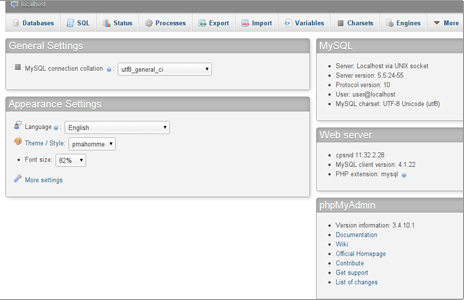
Using phpMyAdmin, click on the “Structure” tab
Underneath the list of tables click on “Check All”
Choose “Drop” from the menu called “with selected”
Choose “Yes” when the message pops up asking if you want to drop all tables
Re-enable your permalinks as you had them in the last installation


You’re good to go.

Moving from host to host

If you’re moving the site to a new host, it’s exactly the same as when you upload from a local server, with one key difference being that you will have to download all of your files from the existing host using FTP.

Changing the URL
update_option('siteurl','http://www.new-site-address.com');update_option('home','http://www.new-site-address.com');

If you need to change the URL of the site as it’s in a subdirectory or it’s a new domain name, you can do this by adding some lines to the functions.php file of the theme, as below.

Then, load the new files onto the site and it should work fine. Don’t attempt to just copy all of the files and database over, as this won’t work properly and you’ll end up with broken links.

Once you’ve then loaded the new files, test and delete the lines from the functions.php files, as your new settings will now be stored and saved in the database.

If you need to set up 301 redirects, which is important to both search engines and users, then you’ll need to connect to the old site and edit the .htaccess file. Locate the file and then paste this code at the top of the file:
1 #Options +FollowSymLinks
2 RewriteEngine on
3 RewriteRule ^(.*)$ http://yoursite.com $1 [R=301,L]

Once you’ve done this, go back to the new site and test to ensure that the changes have been made successfully. It’s also a good idea to submit the change of URL to Google via Webmaster Tools and you will also need to verify it.

Finally, once you’re confident that all is working well and you’ve checked and tested, remember to tell the site users about the change. You can do this in whatever way you think will be the most effective, by newsletter, blog post or on social media and if you still own the old domain, you can set up a temporary redirect to catch any that initially fall through the net.

That’s it, all you need to do to change the location of your WP site, even if you’re using a new URL.
Read More

The State of Blogging: A short history of blogging

Leave a Comment
Despite having far too many other things to do this year, I promised myself I would try to put down a book and slowly but surely its coming together. No title yet, but it will be a blogging guide of sorts.
I’m not going to post every part of the process here, although if your interested or even better a publisher, please don’t hesitate in contacting me.
What I need some guideance on is the history of blogging. What follows is the first draft of Chapter 3: A Short History of Blogging. My writing style is to write to the end without editing, then go back and add and amend with the reflection of time and space, and this hasn’t had that treatment yet, and will probably be expanded and totally changed before going to press, but for those interested in the subject please enjoy, and for those who may know more of the history than please, please don't hesitate in correcting any errors in the comments of this post.
A Short History of Blogging
The Word
The first use of the term weblog in relation to the delivery of content on a website comes from the delivery of a paper titled “Exploiting the World-Wide Web for Electronic Meeting Document Analysis and Management” by G. Raikundalia & M. Rees, two lecturers from Bond University on the Gold Coast, Australia made to a conference on August 14, 1995.
The paper discussed the use of
“a Web browser access to various meeting document information, such as minutes, tabled documents, reports and document indexes. Applications are being developed to take standard electronic meeting log files, postprocess them in a variety of ways, and generate a series of indexes and summary files. These files are formatted in HTML and exploit hyperlinks to the full in order to relate the different types of information.”
Although the paper is aimed at the recording of electronic meetings, the processes described reflect strongly on what blogs evolved into.

Interestingly the term “Weblog” is not featured on the remaining record of the paper, which is now hosted at the Charles Sturt University website, but is featured in its correct context in a Usenet post promoting the papers delivery at Bond posted on August 6, 1995.
Popular use of the term Weblog as we know it today cam from Jorn Barger of the weblog Robot Wisdom (robotwisdom.com) in December 1997.
The concept
The origins of modern blogging are often as argued about as what blogging is.
Many point to blogs as websites or webpages that provided links and comments to other pages, and its is from this basis that modern blogs emerged.
Tim Berners-Lee, father of the World Wide Web, first posted a web page in 1992 at CERN that kept a list of all new web sites as they come online.
The National Center for Supercomputing Applications (NCSA) started a What’s New list of sites in June 1993. Notably the site provided entries sorts by date and the What’s New links included commentary. This service was eventually taken over by Netscape in what became on of the more popular web sites of its time.
In January 1994, Justin Hall launches Justin’s Home Page which would later become Links from the Underground. The site included links to and reviews of other sites. Notably on 10 January 1996, Hall commences writing an online journal with dated daily entries, although each daily post is linked by through an index page. Of the journal he writes
“Some days, before I go to bed, I think about my day, and how it meshed with my life, and I write a little about what learned me.”

In February 1996, Dave Winer writes a weblog that chronicles the 24 Hours of Democracy Project.
In April, Winer launches a news page for users of Frontier Software, that goes onto became Scripting News in 1997, one of the oldest weblogs remaining on the net today. The company he heads, Userland goes on to release Radio Userland, one of the first blogging software tools.
After Jorn Barger introduced the term weblog into popular use in December 1997, blogging as we now know it continued to develop.
In November 1998, Cameron Barrett published the first list of blog sites on Camworld.
In early 1999 Peter Merholz coins the term blog after announcing he was going to pronounce web blogs as “wee-blog”, that was then shortened to blog. At this stage, a list maintened by Jesse James Garrett recorded that there were 23 known weblogs in existence.
As blogging started to grow in 1999, the first portal dedicated to listing blogs was launched, Brigitte Eaton launched the Eatonweb Portal. Eaton evaluated all submissions by a simple assessment that the site consist of dated entries, one of the criteria we use to day in identifying a blog.
In May 1999, Scott Rosenberg at Salon.com writes one of the first media articles on the emergence of weblogs and refers to the growing number of “Web Journalists”.
In August 1999, Pyra Labs, today owned by Google, launches the free Blogger blogging service, that for the first time provides an easy set of tools for anyone to set up a blog. Other services launched around the same time include Pitas and Groksoup, neither of which capture the imagination of bloggers in the same way as Blogger did.
Over the following 12 months, blogs explode, new companies and tools enter the market. The rest, as they say, is history.
This articles is written on the basis on Pew Internet & American Life Project: The Pew Internet & American Life Project is a non-profit initiative of the Pew Research Center and is funded by the Pew Charitable Trusts to examine the social impact of the internet. The Project does not advocate any policy outcomes. It is non-partisan.

Read More

Place Adsense Ads In Middle of The Post in Blogger-Any Template Work Around Method

Leave a Comment
Placing adsense ads in middle of all the posts will give a high CTR which eventually increases earnings. In word press, There are customized plugins available for placing ads in middle of the posts. But in case of blogger it is some what tricky part to place adsense ads in middle of all the posts. We have developed a script which can place adsense ads in between the post exactly in the middle of the content. The procedure for placing adsense ads in middle of  the posts in blogger is shared below.

Place Adsense Ads Automatically In Middle of All The Posts In Blogger:

Follow The below process to place adsense ads in Middle of all the posts automatically in blogger.

Step 1:

Login to Your Blogger Account
Go to Template >Edit HTML

Step 2:

Search For Below Code in your template.
<data:post.body/>
You will get multiple codes similar to above code. You have to select the second code which is similar to above code in order to make the script work properly.

Step 3:

Replace The above Code With The Below Code.
<div id='jobmiddlenew'>
<data:post.body/>
<b:if cond='data:blog.pageType == &quot;item&quot;'>
</div> <style>
</style>
#addcodemiddle{display: none;} <div id='addcodemiddle'>
<script type='text/javascript'>
Place Your Ad Code Here </div>
var str2=str1.length;
var str1=document.getElementById(&quot;jobmiddlenew&quot;).innerHTML; var str3=str2/2;
n = substr.indexOf('.');
var substr = str1.substring(str3, str2); var n = substr.search(&quot;&lt;br&gt;&quot;); if(n&lt;0) { if(n&lt;0) { n=0; }
var firsthalf = str1.substring(0, str3+n+4);
var firsthalf = str1.substring(0, str3+n+1); var secondhalf = str1.substring(str3+n+1, str2); } else { var secondhalf = str1.substring(str3+n+4, str2); }
var strnew=document.getElementsByClassName(&quot;post-body entry-content&quot;);
var addcode=&quot;<center>&quot;+document.getElementById(&quot;addcodemiddle&quot;).innerHTML+&quot;</center><br/>&quot;; var newbody=firsthalf+addcode+secondhalf; strnew[0].innerHTML=newbody; document.getElementById(&quot;addcodemiddle&quot;).innerHTML=&quot;&quot;;
</b:if>
</script>

Step 4

Replace The Place Your Ad Code Text With Your Adsense Ad Code in the above code and save your template.

If you are facing any kind of issue then do let us know in your comments. Happy Blogging Cheers
Read More
Next PostNewer Posts Previous PostOlder Posts Home